One
important question is left for us to address and it can be very
easily overlooked: what St Teresa has to say to us about
Evangelisation.
She
is a woman great of heart, full of compassion for the Church of her
time, clearly seen in Chapters 1 and 3 of the Way
of Perfection,
where we witness her enormous suffering because of the Protestant
Reformation, not to mention all the disastrous news she was receiving
from France. It is true that all the graces she received greatly
spurred her on to increase her desire to reform her life and create a
monastery. It is true, too, that the powerful grace of witnessing the
place she deserved in Hell, had she not been saved by the Lord's
mercy, consistently urged her on to start a new life. We know that
she founded seventeen monasteries, which is a momentous achievement,
given the means she had and the short time it took to accomplish. But
all this does not necessarily give any clear indication of
'evangelisation'.
How
can St Teresa's teaching shed a light on the very hot topic of
Evangelisation? It is very rare to compare Evangelisation with the
fact of sitting on the top of a very high tower, in the guardhouse,
having a wider and deeper view with being capable of measuring the
heights and depths of God; in fact all these elements are necessary
in order to spread the Gospel. In one word, in order to evangelise,
we need to find, in contemplation, the supernatural wisdom of God.
Christ wants us to be 'witnesses'! Witnesses of the Risen Lord. Yet,
to bear witness necessitates seeing the person, meeting him, actually
touching him and finally contemplating him. This high 'tower', this
living and contemplative dimension of our relationship with Christ is
necessary in order to bear witness to Him. This is very seldom
underlined.
Unfortunately
this tower must definitely be built! It requires a steady effort
aiming for growth and not being spread too thinly. Inevitably there
is a constant referral back to the question of the spiritual life and
of its priority for us. The reason is simple: one can impart to
others only what one has first assimilated. This demands extreme care
in nurturing a deep relationship with Christ first, in order to grow
spiritually. On a tower, the place of the guardian or night watchman
is not at mid-height of the tower, but at its summit! Therefore it is
vital to reach the summit in order to have clarity of vision and not
to act with haste by lowering one's gaze to mid-height only. In a
sense, this is how evangelising progresses: Suppose
one of you wants to build a tower. Won't you first sit down and
estimate the cost to see if you have enough money to complete it?
(Luke 14:28)
However, do we pay attention to and acknowledge this important fact
of 'completing the tower'? After all, it's only logical that a task
be completed. In St Teresa's case, then, after her conversion and
from the moment she started to receive a steady stream of 'grace
upon grace', would she not have felt the urge to do something for the
Lord? But with lack of experience and discernment as yet still
growing, the process would necessarily take some time to be
completed! Herein, therefore, lies the reason for the Lord's delay in
allowing her to do any important work for Him – at least until she
was ready for the grace of 'Spiritual Engagement'.
Loving
one's neighbour is of paramount importance, and this from day one, as
Teresa's growth in grace was to reveal! Charity is fundamental and
does transform us in Christ! But charity is not necessarily
'Evangelisation'. It is more limited in time and content. A great
Master in Spiritual Life of last century, the Carmelite Father Marie
Eugene Grialou, saw this point with great clarity. In the forties and
fifties he wrote a great 'summa' of Spiritual Theology in the form of
a substantial commentary of St Teresa's book the Interior
Castle, its title
being I want to see God. Toward the end
of the magnum opus, he endeavours to write a small treatise on the
relationship between 'spiritual growth' and 'apostolate' according to
St Teresa. His intuition is of rare brilliance! Why? Because being
able to recognize the link between them is highly pertinent! In fact,
one of the members of his secular institution, Notre Dame de Vie,
transformed it into a wider study and published it as a book. That
this work is of fundamental significance cannot be denied.
Let
us expand a little on this brilliantly intuitive work. It is very
rare to find an analysis on the direct relationship between, on the
one hand, the spiritual growth, transformation and sanctification in
the agent of evangelisation and, on the other hand, the quality and
great fruitfulness of his apostolate, ministry and evangelisation. St
Paul clearly endorses this in that he says 'without charity' all that
he does is mere gesturing (1 Corinthians 13:1 : If
I speak with the tongues of men, and of angels, and have not charity,
I am become as sounding brass, or a tinkling cymbal).
It is God alone who makes
us bear fruit, His love pouring into us adding greater merit to all
that we do. If we are not connected to God, either the divine stream
of the grace of God will not flow, or it will flow only feebly,
crippled by our clumsiness.
Paradoxically
we rarely address these issues either theoretically or pastorally.
The question is 'Why'? Because our starting point is that the
apostolate and the ministry are separate areas to be worked on, we
are blind to the labourer's being ill-equipped for this! As the
apostolate is mandatory, hardly anybody analyses the conditions for
increasing fruitfulness in the vineyard, resulting consequently in
the quality of the labourer not being addressed. Instead, only their
intellectual formation and theological qualifications are considered,
to the detriment of the spiritual life. Their spiritual life is
considered as being a private matter, of an interior dialogue that
has no immediate connection with the possible fruits that might
result.
It
is true that these are profound issues, but of necessity they
must be addressed, because it is on them that the fruits of our life
depend, it is they which reflect God's true intention when he chose
us. 'You
did not choose me, but I chose you and appointed you so that you
might go and bear fruit – fruit that will last' (John
15:16). It is
not surprising, therefore, to hear criticism of the contemplative
cloistered style of life of St Teresa's nuns such as: 'what good are
they doing?', 'wouldn't it be better for them to come out of their
enclosure in order to be useful to their neighbour instead of
remaining enclosed doing nothing?' This is a blatantly superficial
judgment that fails to appreciate or understand how the Gospel
spreads, or what occurs in the hidden recesses of peoples' hearts.
When St Teresa writes to her sisters, she often asks them to be 'such
as', namely, transformed by the Lord, so that their prayers become
more powerful (see Way
of Perfection
Chapters 1 and 3)! 'to be such as' goes a long way in Teresa'a view!
It is not a passing comment in her writings, but in fact encapsulates
the entire process of the spiritual growth that it implies and that
should be implemented, that is: the closer one gets to God the more
one is transformed into Him, and gains – by the grace of God – an
increasing, an extraordinary, 'hold' on God, which enables them to be
instrumental in the salvation of more people. In sum, to 'evangelise'
is first and foremost to obtain Christ's grace for others. It is true
that Christ obtained everything for us on the Cross. But this
salvation needs to be communicated to others, and the Lord's plan for
us is that we participate in this work, as St Paul specifies: we
are the collaborators
of the Lord (1 Co 3:9; 2 Co 6:1), of his grace.There is a need, after
all, for all the graces obtained by Christ on the cross (our
salvation) to be passed on to our brothers. Surely this is the basic
requirement for any evangelisation! One can preach ad infinitum, but
if this is not done while being spurred on by the divine life in us,
it will be like 'sounding brass, or a tinkling cymbal' as St Paul
says.
Are
those, then, who plunge into action, into apostolate, connected to
God, to divine charity? Preaching is not one 'job' amongst others! It
is sacred work! My
Father works always says
the Lord (John 5:17), and the Son sees
the Father doing, and he does the same'
(John 5:19) - these are important indications of real 'work' and
real divine 'action' in the Gospel of St John. They are put there in
order to enlighten us, for if Christ, who is the
Evangeliser and the
Witness par
excellence, proceeded in this way, how can we evade it? This greatly
intuitive concept of Fr. Marie-Eugene on the relationship between
'spiritual growth' and 'apostolate' is summed up at the end of his
book I want to see
God, mentioned
above, and deserving great praise should be pondered on at length.
Here, going through her book the Interior
Castle, Mansion
after Mansion, he reviews the relationship between the growth of the
love of God in us and our apostolate. He analyses the state of the
human being at each stage, and questions whether it is advisable for
him to plunge into the apostolate and to which extent, or whether
prudence is needed. He questions the state of balance between the
human and the divine parts in the person, and whether the person is
ready for greater things. 'Is the person rooted deeply enough in God
to undertake great endeavours?' he asks, and 'how does the divine
work in the person?' And so forth. Not only does he address these
questions, but 'pondering' on these questions is also essential and
reminds us of that other cause for pondering: For
which one of you, when he wants to build a tower, does not first
sit down and calculate
the cost, to
see if he
has enough to complete it? Otherwise, when he has laid a foundation,
and is not able to finish, all who observe it begin to ridicule him,
saying, ‘This man began to build and was not able to finish.’
(Luke 14:28)
Two
Questions
Instantly
two urgent questions emerge : do we have to wait until we reach the
summit in order to initiate interaction with our neighbour? If this
is the case, then, why do the cloistered Carmelites not go out and
evangelise – at least the ones who have reached the summit of the
Spiritual Life?
The
reply of St Teresa herself in answer to the first question is to lay
great stress on the importance of love of neighbour in order to grow
(see Chapter 13 in this book). Decidedly, not only is this a
beneficial practice, but it is also a vital one for our spiritual
life, because it facilitates spiritual growth, enlarges our capacity
to love and increasingly attracts inner graces. Without it, there
will definitely be no growth! We are called to practise it from day
one! We simply cannot seek Christ the Head of the Church and neglect
his Body, the Church, our brothers and sisters. Here it is necessary
to add that it is during the Prayer of the Heart, namely during those
long daily moments of silent prayer, that the Holy Spirit enlightens
our hearts and minds concerning our neighbour. One would be surprised
to discover within the 'science of the human being' that the Holy
Spirit unquestionably communicates with us during the Prayer of the
Heart. This having been said, the meaning of 'evangelisation' does
not include throwing oneself into a project, a mission, even a
specific ecclesial one, or an apostolate. From day one, Christ simply
asks us to forgive our neighbour, to help him, to see Christ in the
person of the poor, the suffering, the one who is in need. By
contrast to start work on a project, a mission, is quite another
matter..
The
second question concerning the cloistered nuns is both 'cheeky' and
pertinent. Who says that St Teresa's sisters are not taking care of
their neighbour? From the beginning of their cloistered life till
their last breath they work for the salvation of souls, and more
especially for priests (read Chapters 1 and 3 of Way
of Perfection). Is
it possible for the Love of Christ to be poured into the heart of a
human being for the latter not to be filled with supernatural
compassion for his neighbour? The condition, in fact, for a young
girl's entry into a Discalced Carmelite Monastery is that she
dedicate her prayer and her sacrifices to priests. Her entire life
(her efforts, sufferings, sacrifices, prayers...) is oriented towards
and centred on this intention. It may be better therefore to reword
the question another way: 'if one of the nuns has reached 'spiritual
engagement' or even 'spiritual marriage' with Christ, what then
becomes her method of evangelising?' In this light, seen externally
the impression given is that, enclosed between four walls, she does
not do a great deal! The question as ever, then, remains: what is
she doing?
Let
us take as an example one of the best representatives of St Teresa's
daughters, St Therese of the Child Jesus. She perfectly embodies the
teaching and spirit of St Teresa of Avila. If we examine her life
more closely, especially from the year 1893 to her death in 1897,
what she 'does' will become eminently clear. It is true externally
her life looks very simple with no great changes from 1893 onwards
including that she will be responsible for the Novices, will pray
especially for two priests entrusted to her prayers, and will become
gravely ill of tuberculosis and die young. Her life goes unnoticed by
anyone outside of the Monastery, but also by those inside it. Let us
remember that after her death, the Church started her process of
Beatification, with the Diocesan Process, and that when one of the
nuns learned of this she said: 'Sister Therese, a saint? What did she
do? Nothing!' Very true – she did not do anything remarkable,
noticeable or of visible impact! But would this be St Teresa's point
of view and analysis of the situation? If we read her works, or
merely remember what she recommends is done in the seventh mansions,
we certainly will reach a different conclusion. St Teresa, in fact,
used to say (see Chapters 1 and 3 of Way
of Perfection) that
she wanted her nuns 'to be in such a way' that their prayers would
have greater empire and influence over Christ. What does it mean to
be 'in such a way'? It alludes to their transformation in the love of
God. St Therese would understand what has already been mentioned
above: the supernatural power of love that circulated from then on in
her veins, resulted in her being able to take part directly in the
action of the grace of God within the Church! An external view of the
Church reveals it is composed of different distinct members. However,
an internal view reveals it to be one Body, wherein the same Divine
Blood (the Holy Spirit) circulates. If this life's blood in a member
is blocked, the blockage is dire! The Vatican II Council, with its
new awareness of the Church as Jesus's Body, clarifies this as it
gives us a greater perception of what is known as the Communion of
Saints. Today, therefore, we have a better understanding of sin and
that one person's sin will affect not only that person and God, but
it will also affect the Church. This is the reason for asking for
forgiveness not only of God, but also of the Church. So then, if we
allow this flow of the love of God in our heart to be deployed, or
even if we increase the power of that flow, we get different results.
The process is reminiscent of the action of a pump, although Therese
herself uses a different comparison - the 'lever'. Concerning the
action of God she says:
All
the saints have understood this, and more especially those who filled
the world with the light of the Gospel teachings. Was it not in
prayer that St. Paul, St. Augustine, St. John of the Cross, St.
Thomas Aquinas, St. Francis, St. Dominic, and so many other famous
Friends of God have drawn out this divine science which delights the
greatest geniuses? A scholar has said: 'Give me a lever and a fulcrum
and I will lift the world.' What Archimedes was not able to obtain,
for his request was not directed by God and was only made from a
material viewpoint, the saints have obtained in all its fullness. The
Almighty has given them as fulcrum: HIMSELF ALONE; as lever: PRAYER
which burns with a fire of love. And it is in this way that they have
lifted the world; it is in this way that the saints still militant
lift it, and that, until the end of time, the saints to come will
lift it.'(Manuscript
C, end)
In
order to understand more fully the 'prayer which burns with a fire of
love' Therese will take another image where the Church is compared to
a great body composed of different members; which member will she be?
'In the heart of the Church I will be Love' (Manuscript B) is the
inevitable answer. She will not be the heart, she has been in fact
transformed into 'blood'! She is so transformed in the Holy Spirit,
that she becomes, by participation, the Holy Spirit (Love) himself.
St John of the Cross will say something as powerful in his own
incomparable way: first, 'the soul gives God (the Holy Spirit) to
God (the Father)' and, 'the soul gives God to whoever she wants' (see
his work Living
Flame of Love).
What a supreme hold the human being has on God!!
This
seems to belong to another world! Only Spiritual Theology is capable
of explaining to us what happens in the depths of the human heart in
the transformative journey. It was a great part of St Teresa's
mission to lift the veil over the world of the interior life which,
while invisible to the naked eye, is very real. She offers to her
readers an 'inner garden' so they can walk within it. As described
in the early chapters, she could be compared entirely to Christopher
Columbus the explorer of a new world, and to Diego de Ribera the
cartographer. Or even closer to us, to Freud and Jung. There are
indubitably entire continents to be discovered within ourselves which
develop with our spiritual life! It is not because they are invisible
that they do not exist. Reference to microprocessors or to
nano-technologies proves this without question! They are invisible to
the naked eye, but they are quite real. Like today's electronic
microscopes or scanners, Spiritual Theology, a science shining with
such power through St Teresa of Avila, is the right tool: it allows
us to 'see' what the naked eye of Theology cannot see.
A
return to details of Therese's life is pertinent here, especially to
the fact that her body is prey to a terminal illness –
tuberculosis. More significant, however, is the massive internal
struggle occurring in her soul, especially starting from Easter of
1896 – God's introducing her into the underground world of sinners.
Reflect for a moment on the beautiful passage we read every
Christmas, at midnight Mass: The
people walking in darkness have seen a great light; on those living
in the land of deep darkness a light has dawned. (Isaiah
9:2) This text mentions 'the land of deep darkness' or in another
translation: 'the land of the shadow of death'. But what is this
'death'? It is nothing less than separation from God! This is a
terrible thought! And St Teresa says it in the Seventh Mansions where
she advocates the need for great compassion for people in this state,
the state of mortal sin.... people who dwell in the obscurity of the
First Mansions, far from God. She is insistent about the need to
remember them in our prayers and that this is a momentous act of
mercy on our part. Remember, too, that many years after experiencing
it, she still had a vivid impression and image in her mind of the
vision from God of her place in Hell, had He not had mercy upon her!
In
Therese's case here, not only does she remember these people, but she
is literally introduced by God himself - as a result of a greater
Love - into their world! Through the Holy Spirit, she is united to
them, becoming out of her transformation in Christ the Love of God
himself, being imbued in all her being by that which invades them:
darkness. Here it is to be understood that only a soul who has
reached the summit of the Tower (union with Christ), has the capacity
(which is at this stage not hers, because she is now being moved by
God) to bear the weight of that contact with darkness. And this is
done out of love, by the action of the Holy Spirit, by virtue of her
transformation in Christ. St Paul says it well: I
am completing in my flesh what is lacking in Christ's afflictions for
His body, that is, the church (Colossians
1:24). We know very well that nothing is lacking in the Lord's
Passion. He is the only one who is fully God and fully man, the only
one who obtained salvation for all on the Cross. But, what is
lacking is not salvation itself, it is the application of this
salvation to more people, to those who are distant from Christ. What
is lacking is discovering a charitable soul, a true Bride of Christ,
who wants to communicate this salvation to her brothers, her new
brothers! The magnificent understanding conveyed by St Teresa and St
Therese is that Jesus does not only desire souls to become his
Brides, reaching 'Union with Christ', but He also desires Brides and
Mothers, Spiritual Mothers, capable of bearing new children for Him!
St Paul, a man, says: My
dear children, for whom I am again in the pains of childbirth until
Christ is formed in you,(Galatians
4:19), indicating that there is no single way of evangelising, of
engaging in the apostolate, or of acting. On the contrary, it is of
central importance, first, to enter the real laboratory of
transformation and evangelisation of the Church. God allowed St
Teresa to undergo the journey of growth in order to reach this goal.
From
the Seventh Mansions, the Mansion of the Lord himself, a new
interaction starts, that of entering into the inner depths of the
human being in need of the salvation realised by Christ, he who is in
need of being carried.... he for whom verbal evangelisation is
insufficient. Here the focus must be on Our Lady, Mother of Jesus!
Did she give voice to any remarkable words of external
evangelisation? Did she have any apostolate? Has she evangelised? No.
And she is the mother of us all. Her mission belongs to all
Christians, and is at the reach of everybody, especially the humblest
of us. She is the mother of evangelising and the mother of
evangelisation. Indeed, it is fitting to say that everything starts
with her and ends in her. We, too, can emulate Our Lady being
enclosed within four walls, and still hold the entire world in our
hands and in our heart, and yet make it turn. After all, the sun
continues to rise everyday. One has only to see and to pose the
question: because of whom?!

Conformity
with Our Lady
“On
the octave day of All Saints I spent two or three very troublesome
days [...] While I was at Matins that same night, the Lord, through
an intellectual vision so intense it almost seemed to be an
imaginative one, placed Himself in my arms as in the painting of the
fifth agony. This vision caused me great fear. For it was so clear,
and He was so close to me that I wondered if it was an illusion. He
told me: "Don't be surprised by this, for My Father is with your
soul in an incomparably greater union."
This
vision has so remained up till now. What I said of our Lord lasted
more than a month. Now it is gone.
(St Teresa of Avila, Spiritual
Testimonies,
Seville 8th
of November 1575)
By
placing Himself in the arms of St Teresa, just as tradition
represents Him in the hands of Our Lady in the descent from the cross
(in fact the sixth sorrow of Our Lady), a real similarity between Our
Lady of Compassion and St Teresa is established. We understand her
fears of being deluded or misled. Herein we discover her supreme
conformity with our Lady of Compassion, rarely given – it seems –
with such supporting evidence in the entire history of the Church.
Jesus has granted St. Teresa the grace of conformity to Our Lady's
life, leading her to the fullness of the Mystery of Our Lady. The
last statement above could mean that this grace lasted an entire
month, in which case this could be the longest Marian grace St Teresa
received. Initially on 22nd
of July 1572 St Teresa had requested the Lord to allow her to take
the place of Mary Magdalen at the foot of the cross. Here Christ is
giving her infinitely more.... the place of his mother.
St
Teresa would not mention any other Marian grace after this one. Was
it because this was unsurpassable? It is noteworthy that this grace
was received three years after the grace of Spiritual Marriage, which
rooted St Teresa in the Spiritual Maternity of Our Lady, in her
compassion for Christ's Body, dead as it was. Also, more trials
would occur in her life, beginning a month later when she received
the order from her superiors to stop founding more monasteries and to
retire in one of them. At the same time the Inquisition paid a visit
to Teresa in the Seville monastery after a denunciation by an
ex-novice. It was the beginning of a great storm hitting her reformed
order. Then too, St John of the Cross was kidnapped and imprisoned.
To make matters worse, the discalced had now to submit to the orders
of the Calced Carmelites. In a word, her entire new world, in one
fell swoop, seemed to collapse – Teresa was certainly living her
'motherhood' in a painful way. Being the woman she was at that
junction however, she would show a great deal of patience and
strength, moving heaven and earth in order to save her reform and
fulfil her God-given mission. This mission would be almost completed
at the Chapter at Alcalà (beginning of March 1581) that consecrated
the autonomy of her Reformation. During this month, echoing some
words heard interiorly in 1572 (see below), Teresa said: I
can speak like Simeon, because I saw in the Order of Our Lady the
realisation of what I wished (Letter
361, March 1581).
On
another day the Lord told me this: "Do you think, daughter, that
merit lies in enjoyment? No, rather it lies in working and suffering
and loving. Haven't you heard that St. Paul rejoiced in heavenly joys
only once and that he suffered often. Look at my whole life filled
with suffering, and only in the incident on Mount Tabor do you hear
about my joy. When you see My Mother holding Me in her arms, don't
think she enjoyed those consolations without heavy torment. From the
time Simeon spoke those words to her, My Father gave her clear light
to see what I was to suffer. The great saints who lived in deserts,
since they were guided by God, performed severe penances; and besides
this, they waged great battle with the devil and with themselves.
They spent long periods without any spiritual consolation. Believe,
daughter, that My Father gives greater trials to anyone whom He loves
more; and love responds to these. How can I show you greater love
than by desiring for you what I have desired for Myself? Behold these
wounds, for your sufferings have never reached this point. Suffering
is the way of truth. By this means you will help me weep over the
loss of those who follow the way of the world, and you will
understand that all your desires, cares, and thoughts must be
employed in how to do the opposite."
(St Teresa of Avila, Spiritual
Testimonies,
Probably Avila, 1572)






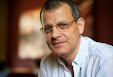 Jean is a French Catholic Theologian, specialised in Spiritual Formation, with more than twenty-five years of experience with Consecrated and Lay people. He obtained his Bachelors in Philosophy and his Masters in Spiritual Theology from Toulouse (France), and the Teresianum (Rome). He is presently completing his Ph.D. in Spiritual Theology at the Angelicum (Rome). Jean’s formation was greatly enhanced by the discalced Carmelite Fathers.
He has lectured in Spiritual Theology in different universities with a practical focus. Many articles, studies and books have been published internationally. In 2003, Jean founded the "School of Mary" which offers formation in Spiritual Life, many video courses being available at www.schoolofmary.org . Lectio Divina and Contemplative Prayer are amongst the most important forms of prayer addressed.
Jean gives Spiritual Direction on a regular basis and also gives retreats. He is married, has a daughter and is based in London.
Jean is a French Catholic Theologian, specialised in Spiritual Formation, with more than twenty-five years of experience with Consecrated and Lay people. He obtained his Bachelors in Philosophy and his Masters in Spiritual Theology from Toulouse (France), and the Teresianum (Rome). He is presently completing his Ph.D. in Spiritual Theology at the Angelicum (Rome). Jean’s formation was greatly enhanced by the discalced Carmelite Fathers.
He has lectured in Spiritual Theology in different universities with a practical focus. Many articles, studies and books have been published internationally. In 2003, Jean founded the "School of Mary" which offers formation in Spiritual Life, many video courses being available at www.schoolofmary.org . Lectio Divina and Contemplative Prayer are amongst the most important forms of prayer addressed.
Jean gives Spiritual Direction on a regular basis and also gives retreats. He is married, has a daughter and is based in London.


