Saturday, 14 July 2012

Are you sure you know Jesus? 2/..

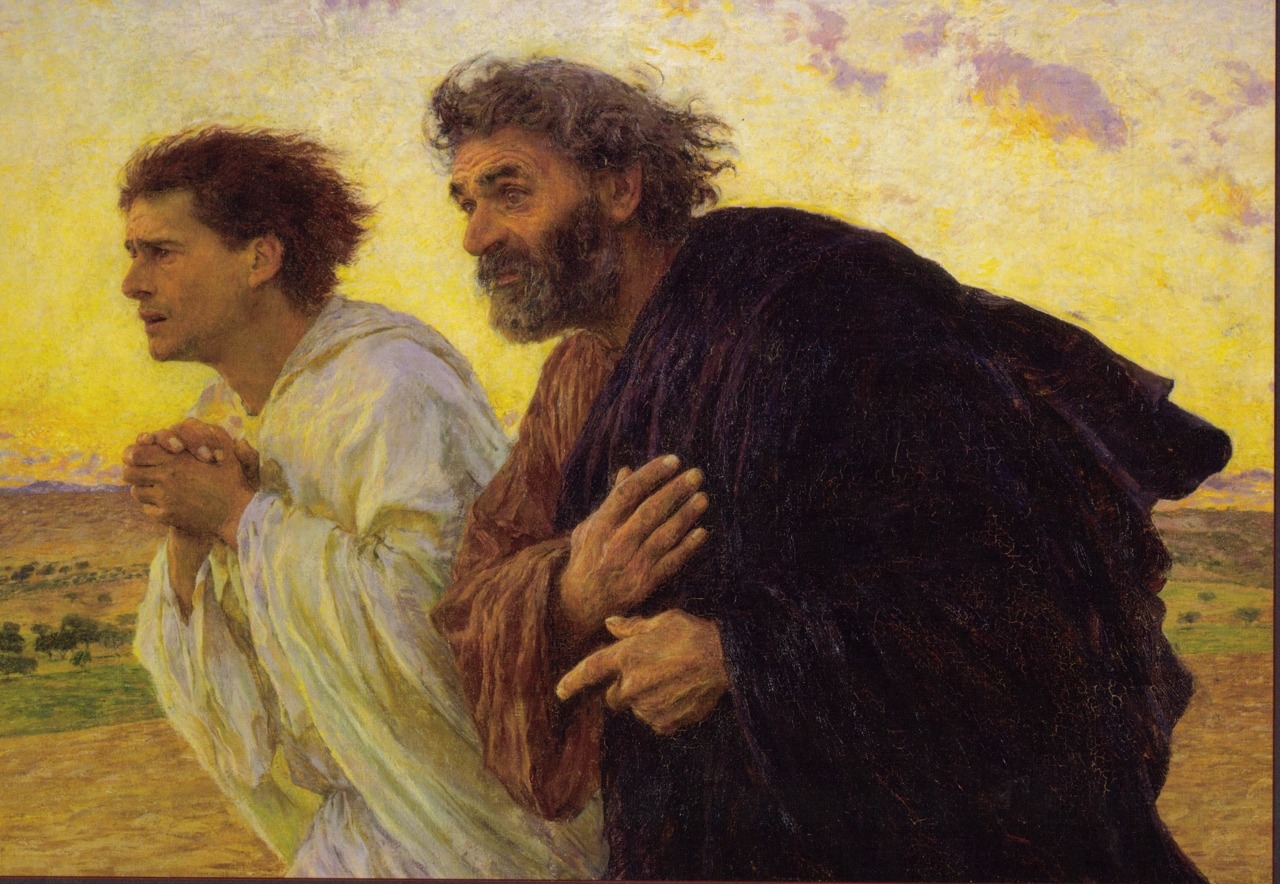
Is anybody there waiting for Jesus, the Risen Lord, early morning on Sunday?

This is a crucial question that we hardly address, while the Lord Himself, in the Gospel, urges us to address a very close issue: in Matthew, chapter 25:1-13 the Lord tells us a parable, the so called parable of the 10 virgins. The lesson of this parable is given in the end of the parable: “Therefore keep watch, because you do not know the day or the hour”.
The frame of the parable is: “meeting the Bridegroom” when He comes back. In order to “be there” when He comes back, one has to “keep watch”, to remain alert, to be ready (the oil), in order to “enter with Him”.

“At that time the kingdom of heaven will be like ten virgins who took their lamps and went out to meet the Bridegroom. 2 Five of them were foolish and five were wise. 3 The foolish ones took their lamps but did not take any oil with them. 4 The wise ones, however, took oil in jars along with their lamps. 5 The bridegroom was a long time in coming, and they all became drowsy and fell asleep.
6 “At midnight the cry rang out: ‘Here’s the bridegroom! Come out to meet him!’
7 “Then all the virgins woke up and trimmed their lamps. 8 The foolish ones said to the wise, ‘Give us some of your oil; our lamps are going out.’ 9 “‘No,’ they replied, ‘there may not be enough for both us and you. Instead, go to those who sell oil and buy some for yourselves.’
10 “But while they were on their way to buy the oil, the Bridegroom arrived. The virgins who were ready went in with him to the wedding banquet. And the door was shut. 11 “Later the others also came. ‘Lord, Lord,’ they said, ‘open the door for us!’ 12 “But he replied, ‘Truly I tell you, I don’t know you.’
13 “Therefore keep watch, because you do not know the day or the hour.” (Mt 25:1-13)

I am not intending at all to comment or interpret this parable, this is not my aim. To me, on top of its proper intended meaning ("keep watch"), this parable sheds an intense light on the very moment of the Resurrection of the Lord, seen as a “coming back”, “from far” (from death, and hell), “victorious of death” and on the necessity to wait for Him, and be ready when He comes.
I see the Resurrection as a "meeting moment", and an "entering in the Kingdom". Let us just appreciate the intense Light it sheds on the Resurrection. Please don't hesitate to re-read this Parable thinking of these hours after Jesus' Death, and if there is anybody "waiting" for Him, when He rises.

This is why I ask insistingly: "is anybody there to greet Him, to meet Him, to “enter with Him” in the Eternal Joy of the Resurrection? Is anybody there, ready, waiting for Him until He Rises?"

I see the fact of meeting the Lord at His Resurrection as a vital fact for the future of Christianity. It is the vital and necessary bridge that reunites what happened before His Death, and what unfolded after His Resurrection. Otherwise, there is a gap, an abyss, a missing link between these two blocks. We take His Resurrection for granted. We think: "oh well, He had to rise anyway". But in fact, it is not true. If there is no flowing communication between the realities of the Kingdom before the Resurrection and what can happen after His Resurrection, we are facing a disconnection, a very dangerous hiatus.

Therefore, I do consider the presence of somebody who waits for Him, desires his Resurrection, wants it, pray for it, the presence of somebody to greet Him at His Resurrection and “enter with Him to the Wedding Banquet” as crucial as the lesson told by the parable, if not more.

In oder to “be part of” the eternal “Wedding Banquet”, the Kingdom of God, it is important to “be there”, in order to greet the Bridegroom.


The two Annunciations

In order to answer to this question we will go back to the beginning of saint Luke's Gospel.
The structure of saint Luke's Gospel opening chapter is fundamental. Saint Luke offers us two annunciations made by the same very High Messenger of God: the ArchAngel Gabriel.

First, to Zachariah, priest, who represents the people of Israel, praying and waiting for the Messiah,


Annunciation to Zachariah

Second, to Mary, young girl, who prays as well, and awaits for the coming of the Messiah, God announces the "good news", by sending His Angel, carrying the Sacred Message.


Who is ready to receive the Messiah? Both are praying, Zachariah (the whole people of Israel) and Mary. Who can believe? Who can open his heart and his whole being to the coming of God-amongst-us?

Saint Luke here is not giving us just an account, or telling a story. He is giving us a crucial element for our future: how can be we believe?

The two annunciations are put in parallel, in order to help us contemplate the difference between Zachariah and Mary. At the core we have the “capacity to believe”. Not only that, but Zachariah's failed annunciation is redeemed by Mary's double act: she believes “for herself”, and “for Zachariah” who didn't believe. In the sense that she had to believe as well that her cousin, Elisabeth, is as well pregnant by the action of God who healed her infertility, at a very old age.

This diptych (twofold parallel story) is fundamental to help us understand that Mary is really the first fruit of the Redemption. She is “full of grace” by a grace of God, a grace totally coming from “Her Saviour” (as she states it in Luke 1:47), from His Salvation realised on the Cross. It is true that the Salvation on the Cross happens, in the stream of time, after Mary's birth, but the Cross transcends time, covers all the times. Foreseeing the Salvation of the Cross, God extracts Mary from Jesus' side, as the "New Eve". Dante rightly calls Mary: “daughter of your son”.

Without Mary's faith, we wouldn't have had Jesus, this is true. But without Mary's faith, Elisabeth and Zachariah wouldn't be able to believe in Jesus. Both Mary's fruits are important.


Are you with me here?

It is not enough to have "the Redeemer", "the Divine Seed", "the Heavenly Wine", we need as well "the capacity to receive Him". This is why Mary is called the “one who believed” (Luke 1:45), the “Good earth” (Mt 13), the “New Skin” for the new wine. She is as well called “Jacob's ladder” (see John 1:51), because in Cana she is the one who can believe in Jesus, and she is the one who leads us, in her faith, to Him. We do “climb” on that Divine Ladder, given by God to us, in order to believe in Jesus, and reach his Side, and say again with Thomas: “My Lord and My God” (John 20).

In our Baptism, God gives us two things then: the "object" of our Faith: Jesus, who is everything for us, our “All”; and the “subject” of our Faith, Mary's capacity to “believe” and follow Jesus.

Mary continues to believe throughout her life, and reaches the point, at 3 pm, Good Friday, where again and again, she is alone, and having to believe in the Core of Jesus Message: “I will die and will rise, the third day” (see previous post). She is the one who carries the “Fire” of that Promise, protects it, against the stormy attacks of death, hell, and so forth... and keeps it intact, waiting, praying, fighting, aspiring, desiring to meet the Risen Lord, when He comes back from the land of death.

And what happens at the early hours of Sunday? “At the Third Day, there was a Wedding” (John 2:1). Do you see what I see?

Do you see the wedding? Who is the Bridegroom, the Bride?


Contemplation

I'll leave you with these thoughts now. Just go back to John 2:1-11 and try to see it under the light of what was unveiled above.

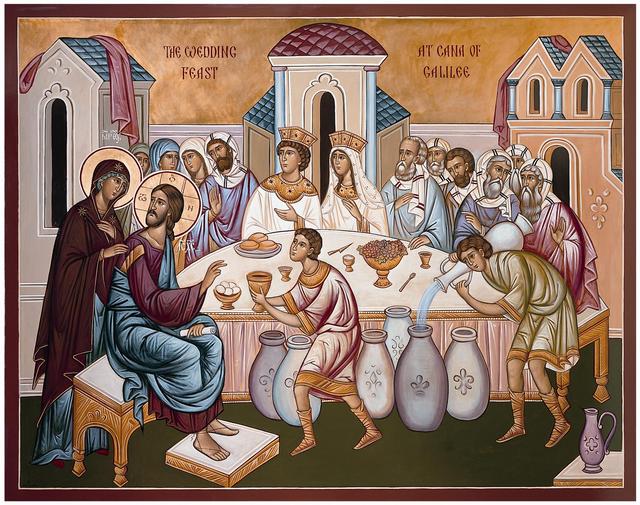
"On the third day a wedding took place at Cana in Galilee. Jesus’ mother was there, 2 and Jesus and his disciples had also been invited to the wedding. 3 When the wine was gone, Jesus’ mother said to him, “They have no more wine.”4 “Woman, what is between you and me?” Jesus replied. “My hour has not yet come.”5 His mother said to the servants, “Do whatever he tells you.”6 Nearby stood six stone water jars, the kind used by the Jews for ceremonial washing, each holding from twenty to thirty gallons.7 Jesus said to the servants, “Fill the jars with water”; so they filled them to the brim.8 Then he told them, “Now draw some out and take it to the master of the banquet.”They did so, 9 and the master of the banquet tasted the water that had been turned into wine.He did not realise where it had come from, though the servants who had drawn the water knew. Then he called the bridegroom aside 10 and said, “Everyone brings out the choice wine first and then the cheaper wine after the guests have had too much to drink; but you have saved the best till now.”11 What Jesus did here in Cana of Galilee was the first of the signs through which he revealed his glory; and his disciples believed in him." (John 2:1-11)


(To be continued ...)

Tuesday, 10 July 2012

Are you sure you know Jesus? 1/..


Believing

In the Roman Latin Rite we do say in each Mass this prayer, right before Communion: "Lord Jesus Christ look not on our sins but on the faith of your Church". What a mysterious expression: “the faith of the Church”!
We believe what the Church believes. The one who baptises, baptises according to the faith of the Church. But what is the Contents of the Faith of the Church ? Some might say : - it is the Creed. To a degree, the Creed sums up all our Faith. Others would add: - it is the Faith transmitted by the Apostles. Reminding us that all the contents of the “Revelation” is given to us, until the last Apostle (John) dies. After that, there is nothing “new” to be added. All that is true.

But I would like to go further a bit, if you don't mind. The capacity to believe is not that obvious. If we focus a little on the Apostles themselves, we'll find that they had their own journey of growth, and they themselves acknowledge to us, many times, in the the Scriptures (the New Testament), that they couldn't believe, that they failed.


The core of our faith

Are you struggling to follow me here? Well, let us swiftly try to sum up the essence of our Faith (the Faith of the Church). How could you sum up our creed? Or, if you prefer, what is the main point in our Creed, without it we consider that our faith is empty?

if Christ be not risen, then is our preaching vain, and your faith is also vain” (1 Co 15:14) The belief in the Death and Resurrection of Jesus is the core of our faith. To go from where we are to where God is, from darkness to God Himself, this takes a journey, it needs a bridge, and without that bridge, we can't reach God. Remember Adam's fall. We are not living in the joy of the Presence of God! Without that "bridge", without Christ and what he realises on the Cross, we can't reach the Father.

We can sum up the preaching of Jesus, with a bit of exaggeration, in saying: “I will die and I will rise again”. To be true, the Lord Himself does it, and He does it, for three times. You may have a look at Matthew, chapter 16, you'll see His first announcement of His Death and Resurrection. From that time on Jesus began to explain to his disciples that he must go to Jerusalem and suffer many things at the hands of the elders, the chief priests and the teachers of the law, and that he must be killed and on the third day be raised to life.” (Mt 16:21) This announcement is followed by two, almost identical ones: see Mt 17:22-23; 20:17-19.

As I was saying, the striking thing is that for such vital matter, the Apostles not only failed in believing Jesus, in believing His Word, His only Word that mattered in all His Message: "I will die, and I will rise again", but they also recognised it in their teaching: we failed.
If the first part ("I will die") was the biggest shock in their last 3 years – they were shattered – the second part of Jesus' word ("I will rise again") is impossible to grasp. He is dead, and He IS dead. It ends here. The concept of Resurrection itself is something really very far from their grasp. Remember the day the big-three (Peter, James and John) were coming down after the Transfiguration, He mentions His Resurrection, but they were wondering “what it meant”. “As they were coming down the mountain, Jesus gave them orders not to tell anyone what they had seen until the Son of Man had risen from the dead. They kept the matter to themselves, discussing what “rising from the dead” meant.” (Mark 9:9-10) The concept is new. Unheard of.

Now, I leave you the leisure to go through all the accounts of the Resurrection in the four Gospels, and try to find one Apostle, or one of the holy Women, who believed in Jesus' Resurrection.

Peter and John? They didn't believe. They still did not understand from Scripture that Jesus had to rise from the dead.” (John 20:9)


Mary Magdalene? She didn't believe, she was preparing during all the sabbath, in secret (you can't show that you are working), the species in order to burry again the Lord. She saw Him Risen and thought she was speaking to the gardener who took his body. See John 20.


So, amongst the Apostles, who believed in the Resurrection? Simply: nobody.

Let us be serious here for a second. If this is “our faith”, if this is “the faith of the Church”, the “faith of the Apostles” there is a serious problem. The Apostles themselves are telling us clearly that they didn't believe. So, in very clear terms, nobody was waiting for Him to Rise. Actually, this is what many would assume.

So all these stories of the 5 wise virgins (Mt 25:1-13), is just unbelievable: your master (any Apostle) can't invite you (they are the ones who wrote the Gospel, of course inspired by the Holy Spirit) to do something that he himself wasn't able to do. This is why, I don't easily buy the fact that “the faith of the Church” is exactly “the faith of the Apostles”. There is a missing link.

Is there anybody waiting for Jesus the Risen Lord, early morning on Sunday?


To help you find the answer, let me go back in time, for a while, to the beginning of Luke's Gospel. This we will see in the next post.


PS: You may want to watch the video of the lesson on Our Lady in our spiritual life (you may want to split it in little bits, since it is long. The following is the first part.):


(to be continued)

Thursday, 5 July 2012

32: The Spiritual Journey 6/11


With this 6th diagram (see below) our presentation of the Spiritual Journey has a turning point. We are not anymore addressing just "Jesus' Journey in us", and "His Action in us", we start to consider our own journey, as a direct result of Jesus' Action in us.
As you will recall, this series of diagrams is meant to present and explain the total shape (topography) of our "spiritual journey". We had first to see Jesus' Journey, Jesus' action in us, because it shapes our future Journey. His journey is inseparable from ours.
Now that we clarified Jesus' journey, we start to focus on ours (our "spiritual journey" is rooted in Jesus-our-Way). This is why the diagram has an ascending curve. We are climbing the Mountain of Perfection that leads to the Union with Jesus-God. We are going upward.


  • The Goal of Spiritual Life


You may notice at first that the goal of the ascent is not God himself (the Divine Nature). This would mean that the top of the mountain goes directly to the Trinity. Here, you have a slight difference. But in fact it is not a small difference, it is a very important and big difference. We aim to reach Jesus, the One who is “perfect God” and “perfect Man”. Our ideal is to be united with Him, to be like Him, so our life on earth becomes an extension of His Life. He is our ideal, because He is not God only, but Man as well (“Son of Man” says the Gospel). Our ideal is not to reach something beyond Him. In Him we find the fullness of Divinity and we get ready to our journey of greater service, with Him and in Him.

  • Note: many authors did make the mistake of putting that in spiritual life we aim to reach the “Union with God” and then after we die. But “God” here, understood as the goal of our life (union with God) is not precise, and can mislead. We cannot have as an ideal a Being that is not incarnated. We cannot put an end to our spiritual life right after the “union with God”, this is not what Jesus wants from us: the perfect disciple follows the example of His Master. All the Apostles did die like their Master. This “deviation”, or incomplete initial vision of the journey of spiritual life did happen because of many factors: one of them is the influence of Greek philosophy during the first centuries of Christianity. Their ideal was the “theoria”, or “Theology”, which is to reach the One, God, and contemplate Him. This is not at all wrong (this is why it was widely accepted as a christian position) but it is incomplete.


In fact, we want to reach Jesus, the fulness of Jesus, the fulness of his height, as saint Paul put it. And “reaching Jesus” is not the final stage of our spiritual life. We want to be “in Jesus” and “Jesus in us”, alive and acting, in order to continue His mission on earth and reach the “fullness of love”. This is the real final goal.
In the Journey of our spiritual life, we have then like two poles/goals:


  1. to reach the top of the Mountain: the union with Jesus: I no longer live, but Christ lives in me” (Ga 2:20)
  2. to reach the bottom of the Mountain: the fullness of love: “I complete in my flesh whatever remains of the Christ's sufferings on behalf of his body, which is the church.” (Col 1:24) All this, especially the second part of our spiritual journey, will appear in the coming diagrams.


This is why, already in this diagram, the arrows that symbolise Christ's Journey and our spiritual journey, not only do unite in the end (Christ starts to live and act in us), but the tip of the arrows does point downward (and not upward). It is anticipating the journey of descent, at the image of Christ who, being fully man, did choose for our sake and for the sake of our salvation, to descent more: Christ "who, being in very nature God, did not consider equality with God something to be used to his own advantage; "Christ Jesus: rather, he made himself nothing by taking the very nature of a servant, being made in human likeness. And being found in appearance as a man, he humbled himself by becoming obedient to death even death on a Cross!" (Phil 2:5-8) We can say that reaching the “Union with Jesus”, we do not consider our union with Jesus-God something to be used to our own advantage... we humble ourselves, by becoming obedient to Jesus' command, imitating Him, to death, a death on a Cross.


  • 6 stages


For now, let us focus on the ascent, and how it happens in us, how it follows Jesus' life as it is presented in the Gospels, as we saw it in the previous diagrams.

6- Jesus' influences along the Spiritual Journey


As we can see, for now, we have at least 6 stages in our spiritual life, that coincide with Jesus' Journey in the Gospels. Remember: the journey of Peter and the Journey of Jesus are matching: in each stage, Christ has a more specific action on the apostles and his followers. On the Diagram above, you can notice the two lines of ascension: Christ one (in darker colours) and ours (in clearer colours). You can see the little arrows that rise from Christ's line to ours, they symbolise the mystical transformative Action of Jesus in us, in each phase.

  • Note: Of Course, Christ is free to act in the order He wants, according to our need seen by His Wisdom. Normally though, He acts this way: from the most exterior part of us to the deepest. Purifying us, step by step, going deeper, changing the way He acts (from the “milk” to the “solid food”), the intensity of His Action grows, since the purer we are the less obstacles we oppose to His Action in us.


Here are the 6 stages of the journey that we can discern for now (we will explore more stages later), and they follow the description of the majority of the Spiritual Masters who mentioned the steps of our spiritual journey (saint John of the Cross and saint Theresa of Avila):

  1. First part of Jesus ministry: “Purification of the Sense”
  2. Second part of Jesus ministry: Turning point, Peter's Declaration, Jesus predicts his passion and death, Jesus heads towards Jerusalem: “Purification of the Soul” (emotions)
  3. Third part: Jesus enters in His Passion: “Purification of the Spirit”
  4. Fourth part: Jesus dies: ends of the purification, “Spiritual Betrothal”
  5. Fifth part: Jesus Rises, Appears for 40 days, Ascends into heaven at the Right hand of the Father: “Spiritual Marriage”
  6. Sixth part: Pentecost: the Coming of the Holy Spirit: the Living Flame starts to Sparkle. Acquisition of the Holy Spirit.


If Jesus' action in the first 3 stages is of "purification", the 4th is more of illumination, and the 5th of Union. This is according to the classical division of the journey inherited from Greek Philosophy.

(To be continued...)

31: The Spiritual Journey 5/11


In this 5th diagram (see below), we continue our deepening of Jesus' descent in us. Doing so is the first step in trying to understand the complete shape of our “spiritual journey”. In order to “understand the Way” itself (the steps of our Spiritual Journey) we have first to understand “what Jesus did for us”, “how He opened the way for us”, "how He became the Way for us". As you see they are both directly related. Understanding Jesus' journey helps us understand our journey, through the new way He opened for us (about the "new Way" He opened for us see He 10:20; Is 35:1-10; Is 11:15-16).

Remark: As you see, “real dogmatics” lead to “real Spiritual Theology”. They are two sides of the same coin, totally adapted to each other, they match perfectly. They attract each other, they call upon each other. They sift each other as well, in the sense that when dogmatics become too abstract (i.e. not “practical”) it should be revised, purified; remember “all Theology becomes Economy”, according to the Father's adage. Both, Dogmatics and Spiritual Theology, put together, they constitute “Integral Theology”. We'll come back to “Integral Theology” another day.


Immersion

This fifth diagram we are about to study is all commanded by this quote from saint Luke where Jesus says: “I have to undergo an Immersion (Lk 12:50). As you can see, the verb “immersed” is preferred to the word “baptised” that you'll find in the majority of the translations. "To immerse” translates the verb "to baptise”. So, it is better to put “immerse” in order to remember what it means and not to jump into rapid conclusions (about "baptism") that are not in the text.


Mystical dimension

Jesus' choice of the verb "to be immersed in" is very deep and opens in front of our eyes a whole mystical dimension to the operation of salvation He undergoes. Here we will explore some of its angles. "mystical dimension" means that we are invited to dive in the deep waters of the expression, and not to fall in the trap of just giving it the reading or interpretation that our brain today can grasp. It is a real mystery. Like an ocean, the mystery invites us to dive in it and explore it. A "mystery" is not dissuasive (it doesn't deter us), it incites (it invites us). "mystical dimension" means that it is not "one dimensional", but it has many dimensions and implications. "mystical dimension" means that "salvation" (the immersion) is not a mathematical, or a juridical operation, it implies the existence of a real interaction between Jesus and us. He mystically reaches each one of us during His lifetime and more especially during his Passion and Death. Deeply, and invisibly (but truly), He touches us, transforms us, and is united mystically to us - He does it of course from His part, and we will have to receive all what He does for us. Not being able to see it with the naked eye doesn't mean the eye of the soul and the eye of the spirit can't see anything. Blessed are the mystics who can see what is happening and can describe it and enrich our faith and love!


“I have to undergo an Immersion”

Jesus has to undergo an immersion. All His Mission is to achieve this Immersion. All His life is a long Immersion, a long descent in us. When Jesus says it (Lk 12:50) He is obviously alluding to His Passion and Death. This is obvious. To a degree, this is the toughest part of his Immersion, so the global is named after the part.

We shouldn't reduce though the “immersion” to a limited moment of Jesus' life (his Passion and Death). The Incarnation itself of God, in a body-soul-spirit, is itself a first step in the long journey of immersion that the Second Person of the Trinity, God, is undergoing. As we previously said, this journey doesn't stop there, it continues until it reaches the very moment of Jesus' Death, where He reaches the bottom of our being, uniting himself totally to us.

This immersion covers not only the whole length of Jesus' life, it covers as well: 
- all humans (each human being)
- all places
- all times.

Nobody is excluded from this immersion. In this sense, any human being, in any moment in history, in any place in the globe, can contemplate a moment of Jesus' life and say: "this moment belongs to me, and I see my Lord entering in me, trying to offer me His transformative Spirit, in order to purify me and make me “His” ".

It covers as well all the human being. From the most exterior part of ourselves, to the most interior and deepest part of us: our spirit, passing through our soul. All our being is assumed, purified, transformed and saved by by the Son of God. He enters and enlightens all the parts of our being.


Blue: waters of our human nature

The blue colour used in this diagram, from light blue to deep dark blue symbolises the waters of our being where Jesus has to be immersed. This choice of colour helps us visualise better that journey of descent, from the most “light”, exterior part, to the most “difficult”, interior part of us.

5- Jesus' immersion in us


Washing our dirty feet

Another quote may attract our attention: “I, your Lord and Teacher, have washed your feet” (John 13:14). This quote explains more specifically what the Lord performs mystically during His Passion. Here, the image the Lord is using is still “water” but in a different way, not a baptism but a simple direct washing. Of course the meaning is the same, because "to baptise" is to wash and purify. 

Here, the Lord is the one who uses the water of His Love and Sufferings, the water of His Human Nature, united with His Divinity and full of Holy Spirit, in order to wash and purify us.

He says that He is washing our “feet”. “feet” are the lowest part of our being, the part of the body that is most exposed to dirt. If He washes our “feet”, this means that he washed “all our being” (see John 13:10 “Those who have had a bath need only to wash their feet; their whole body is clean”). If the toughest part is done, this means that it is preceded by the easiest parts. Purifying our spirit is the toughest, then the soul, then our body.

This image of "cleaning the feet" sheds a light on the “immersion in us" He is performing. Immersion brings cleansing, immersion is cleansing. They, Purity brings Union.


Drinking the cup of our sins

Another image can help us enter in the divine meanings of this “Immersion”: “drinking the cup” (Matthew 26:39 And he went a little farther, and fell on his face, and prayed, saying, O my Father, if it be possible, let this Cup pass from me: nevertheless not as I will, but as thou wilt.”

The “cup” here alludes to the cup full of our sins. It is a “bitter” cup. Sin is a distance from God. Therefore “drinking” the cup means that He integrates in Him, He experiences the distance between us and the Father, the darkness where we are (see Is 9:1:), the darkness we became. "Drinking" here shows how we are intimately assimilated to Him. We become part of Him. What a frightening concept to get that close to Darkness for a Being who is ONLY "divine LIGHT".


Carrying our sins

One final image can help us understand better the “Immersion” that Jesus is undergoing: Behold, the Lamb of God, who takes away the sin of the world!” (John 1:29) He is the Lamb of God. The characteristic of the “Lamb of God” is his permeability, his “capacity of absorption”. He carries the sins. But not only the “sins”, He carries first and foremost all the Human Being.

Plus, one has to mention the capacity of exchange: He takes our being, He takes our sin, our darkness, and, in the same time, He offers His Divine Life. He communicates His Holy Spirit.

This is the double way action of the Holy Spirit: from one side: He purifies, and from the other He communicates Divine Life.

The Body of the Lamb absorbs our Body, His Soul absorbs and carries our soul, and is united to it, and His spirit as well.


The Pastor carries his sheep

An image that goes with this last one is the image of the “Pastor carrying on His shoulder his sheep” (Luke 15:1-7). The deep analysis of the “immersion” we are going through, suggests that in reality the Pastor (Jesus) is not only carrying us on His shoulder, but “in Him”... His Body carries our body, His Soul carries our soul and His spirit carries our spirit and brings it back to life.

(to be continued...)

Tuesday, 3 July 2012

30: The Spiritual Journey 4b/11


Hi Rufaro, thanks for the question you posted under "The Spiritual Journey 4a": “In your diagram, what do you mean by "culturally" ready to absorb our humanity?”

When I do mention this expression, I am speaking about the time when Jesus starts His Mission, at the age of 30. He is first Baptised. Here is how I did put it in the Diagram: Baptism of Christ: at the age of 30 (see Luke 3:23), He starts His ministry. Christ is ready to receive us in Him. The Sponge is culturally and humanly ready to absorb our humanity.”

As I did mention in “The Spiritual Journey 2”, Jesus grows, in His human nature, as saint Luke says: “And Jesus grew in wisdom and stature, and in favour with God and men” (Luke 2:52). His Divine Nature doesn't grow, doesn't require any growth.


To Save us "out of love"

Since God wants to save us with His human nature, considering His Human Nature as a noble living “tool”* we need to pay attention to the way God does it.

*”tool”: first, let us not be offended by the expression “tool”. It has to be taken and understood and an image, and only taking part of the similarity not all of it. Because a normal “tool” we use in our daily life is rather a “dead” one. While we can't say that about the “human nature” that the Son of God takes. It is alive. A body, a soul and the highest part of the soul: the spirit, are very alive, they have their functions, and their relative autonomy according to their very nature. They are called here “tool” only in a analogical way. They have their total and full dignity. So let us not take the negative aspect of the image.

It would have been much “easier” for God to save us with his Divine Nature alone, but this wouldn't be an “out of love” way to save us, it would have been “out of power”. Love makes the one who loves similar to the beloved. God loves us, and it is because He loves us that He wants to save us and bring us back to Him. God is moved by love, by His very Nature (the Divine Nature): Love.
So, since Love (the Holy Spirit) makes the One Who loves (Jesus) similar to the loved one (us), He wanted to get as close as possible to us (including all what constitutes us as “humans”, i.e. culture). He then wanted to be like us, as much as He could (except for sin). This means that all the pores of his Human Nature (body, soul and spirit) had to open, develop, and be similar to ours, and “discover” us. Of course in His Human Nature, He is purer than us. But “pure” means as well with greater sensitivity, greater intelligence, greater capacity to love.

"He [humanly] learned obedience" (He 5:8)


He wanted to be similar to us, starting with His Culture: He is born amongst the “chosen People of God”, in a specific moment in history, in a specific land, with a specific language, specific habits, traditions, concepts: in a word: He had a specific Culture.

He certainly, out of love, did observe us humans, and studied us, in order to love us more, and to help us better. Of course He had high knowledge, coming from his Divinity and from the Holy Spirit, reaching his soul. But still, in order to use his “human nature” according to the laws and functioning of his human nature, out of love, He had to “undergo” the speed (the slowness) and capacity of digestion of the human process of growth (it takes years, rightly)!

Sometimes we pay less attention to the 30 years of preparation of Jesus. At 12 he becomes adult according to the Jewish tradition. He goes to the Temple.

Jesus, at 12, in the Temple
Then, after that, he comes back to his home town and to his home town. And continues the human process of growth, from 12 to 30: this means 18 years of “work” of preparation. "Then he went down to Nazareth with them and was obedient to them." (Luke 2:51)

Jesus and Joseph
This great “work” He goes through is very important in order to understand the whole process of Salvation/Redemption.
He saves us with His humanity (as pointed out in a previous post (Spiritual Journey 2), mentioning a Council that defined that issue, “Constantinople III, 680-681”), and His Human Nature (body, soul and spirit) is like a “hand” (or a "sponge") that is supposed to “grasp” us, hold us, embrace us, surround us, absorb us, be united with us.

His Body holds and embraces for inside our body,
his Soul our soul, and
his spirit our spirit.
(his "spirit" is the highest point of his soul; saint Thomas Aquinas calls it in latin: mens)

In order to “hold” us tightly, and be united with us, His human Nature (the “tool”) has to be ready: mature, adult, knowing his own culture, the words, the mentality, the habits, and tons of things that constitutes a “culture”.
With His Human Nature he had to undergo this journey in order to get closer to us. So these years (from 12 to 30) are very important for that purpose. 


During these years He is constantly getting (with his human nature) closer and closer to us, getting a better inside understanding of “who we are”, our weaknesses... He is our Saviour, and he took the human journey of growth to be as well “perfectly human” (as it is needed for that type of salvation: the salvation “out of love”).

In order to save, out of love, according to God's vision, He needs to be perfect God and perfect human. Coming out of the womb of our Lady doesn't make him (or any other being) a fully human being. In the animal world, us humans (we are more than animals but it is just a comparison), we are the specie that requires the greatest number of years to achieve maturity, and readiness for life. The process in long. We do not become humans by just coming out of the womb of our mother. We need years and years.

So, in order to become our Perfect Saviour, Jesus had to become Perfectly Human. In order to reach that “perfection”, he had to undergo, out of love, this journey of human, cultural growth.

He wanted for us Mercy, He wanted to understand us, from inside of his Human Nature, therefore, He went through this journey. This is why, I said that at that time (at the age of 30), when he started His Public Mission, he was ready, in his Human Nature.

Of course, at each age, He was perfect: He had the human perfection of each age. But He still had to go through all the ages. If He really wants to save us “out of Love” he had to be as close as possible to us, and similar to us as much as possible. So we can recognise in Him not only “the God that knows everything”, but “the Human Nature” that feels us, that carries us, that underwent through all that trouble to Save us.


The preparation of His Words

Plus, you have to add the fact that His words, all the words that He will use to save us, were like prepared, backed, in his Human Nature, during all these years. They came out of His Human Nature (brain, soul,..), full of Divine life, truthful to God, but as well truly truthful to us humans (having a human aspect to them).
Jesus had to “form” them in Him.

It is too easy to consider that everything landed in his humanity, in his human nature, from above, by the action of the Holy Spirit. But this understanding is heretical, in the sense that it doesn't respect a theological rule that says that each nature had to work and act according to its own rules and functions (see st. John Damascene, “De fide orthodoxa”, taken on board by st. Thomas Aquinas “Summa Teologica” IIIa Pars).

The words He uttered, these words that are described as “Spirit and Life” (see John 6), i.e. that contain “Holy Spirit” and “Divine Life” have been formed in His Human nature throughout the years: his sensibility, his choice, his brain, his culture, what he saw and received in his culture from his mom, his adoptive father, his family, his human experience, what he noticed and observed.

These words that He uttered and that saint John, in his Gospel, admires, are really a great achievement. They are like Him, in the same fully Divine and fully human. They took time to “bake” in Him, adhering to His human rhythm of growth, forming them, in Him, by the help of the Holy Spirit and his prayer. (Here I am speaking about the human side of Jesus).

His Perfection, at each stage of His human life, is not at all undermined by that growth. He is God at all the stages of His life. He has as well the human perfection of each stage of His life. But still, he grew in wisdom and stature, and in favour with God and men” (Luke 2:52).

I hope I replied t your question.

PS Speaking about Jesus, here is John Rutter's, “Dormi Jesu”, "The Virgin's Cradle Hymn", a short lullaby text.
Dormi, Jesu! Mater ridet
Quae tam dulcem somnum videt,
Dormi, Jesu! blandule!
Si non dormis, Mater plorat,
Inter fila cantans orat,
Blande, veni, somnule.”
Sleep, sweet babe! my cares beguiling:
Mother sits beside thee smiling;
Sleep, my darling, tenderly!
If thou sleep not, mother mourneth,
Singing as her wheel she turneth:
Come, soft slumber, balmily!”