Showing posts with label Jesus. Show all posts

Thursday, 13 December 2018

185- Spiritual Formation

Introduction

In this article we would like to answer the following questions:
- What is Formation in Spiritual Life (FSL)?
- How is it different from: Formation in Consecrated Life, Spiritual Theology Teaching, Spiritual Direction, Confession, Courses, Catechesis, Talks on a Spiritual Subject, Theology, Meditation, Personal Spiritual Life, Personal Prayer Life, Community Life...?
- What does FSL require?

The Prophetic Branch of the Church
and the Birth of “Spiritual Formation”

In the Prophetic Tradition of the Church, i.e. Monastic Life, Religious Orders, “Formation in Spiritual Life” is a very specific task to the point that in the early phases of formation in Monastic and Religious lives we have the appointment of a person called “Master (“Mistress”) of Novices”, and “Master” for the remaining Junior years that precede the final consecration (final vows).

It is true that the “Master of Novices” and of Junior years (“Master of Students”, “Mistress of Juniorate”) cover more than just “spiritual formation”: they have also to form the candidate into the specific style of life (Monastic, Religious) and of the specificity of the Order or Congregation’s spirituality, traditions and uses. So “Spiritual Formation” will not be the only task of the Master, but it remains the main one because without spiritual life, without a living and growing relationship with Christ, the entire life fails to have any meaning, it has no purpose no power to it. Let us remember the fundamental meaning of Monastic Life, which is traditionally and historically the first form of “consecration” (if we exclude the early ones like Consecrated Virgins...). If we look back to St. Anthony the Great, Father of all monks, and father of the prophetic branch of the Church, if we meditate on his life (see his life written by St. Athanasius) we notice immediately that first he received a call (“If you want to be perfect, go, sell your possessions and give to the poor, and you will have treasure in heaven. Then come, follow me.” (Mt. 19:21)), and is not just starting a life on his own impetus and choice and secondly, the journey that is triggered by this call, is all unified around one thing: searching for God, for Jesus, doing all that could be done, to find Him and Him only. Nothing else does matter, at all! This is why the desert was his reality and why the “symbol” of the Desert remains a central one for the Prophetic Branch. It is from his call that all other vocations blossomed, and all other forms of life found meaning and purpose.

Therefore, the archetype of any person who is starting out to belong to this branch of the Church, the Prophetic Branch, features two qualities:
  • the call is call from Jesus (not necessarily leaving everything material behind (mind you it was progressive in the life of St. Anthony, proceeding from material things to more subtle things, through emotions, imaginings, thoughts, until he reached union) and
  • his life is unified by this quest, this huge desire to search for Christ and never to stop until finding Him in the Union with Him.
Hence the fact that the “Spiritual Formation” is the main task in the formation offered by the Master of Novices and the Master of the following juniorate years up to the final consecration/vows.

Nothing can be put above “spiritual formation”. It is true that human formation, psychology, community, daily tasks are very important, but without Spiritual Formation as the main “manager”/focal point/point of reference it ceases to work.

The person who knocks at the door of a monastery in the Desert is chiefly a person who is Called! And if the person is really called by Jesus, then Jesus and His Grace working in the Person are the main players (of course with the free will of the person in play) in this Call. This is why, sometimes, the Monks in Egypt do test the call rather harshly: they do not open the door of the monastery and leave the candidate outside, in the desert... sometimes for more than one day! Motives are examined! The person can be fleeing his responsibilities in the world, his difficulties, and struggles! He can be a one who is depressed. And on and on.
The monastery is not a place for “losers” or people who have failed in the worldly life. In Egypt for many years for instance, it still is very rare to accept a candidate without a University degree! Why? Because it is so common to have one, and not having one could well be a sign of something unsound! This is just an example for a specific country, not a rule for all places. In other places people can have a successful job for years and this is just as good.

Therefore, it is imperative that the intention, the motivation, the very drive of the individual is checked. Who is calling whom? Is the Grace of Jesus working in this person? Is he or she really called by Jesus, driven by Him, attracted by Him?

Then, however, if the person enters it does not necessarily imply mean that he or she has reached the goal! They are just about to start the journey to reach Union with Jesus. The person now will have a “Master” appointed to his service, who will follow him all the time and form him. Hence the existence of “Spiritual Formation”. Again, as said above, admittedly, there are plenty of other aspects to this formation, we agree on that, but the main one is a “Spiritual Formation”, because this manages everything.

What is “Spiritual Formation”?

Does the applicant embark on Formation immediately? Are there other steps before Formation? Yes of course! Today we have a variety of other steps before it:
- The person goes to see (“come and see” (John 1:39), pays a visit to the monastery or religious house!
- The person can afterwards go and spend more time with the Monks! Although here the “style of life” is very much to the fore as well as the necessity to know to which state of life Jesus is calling the person: “spiritual growth”, “human maturity” and a balanced life are involved implicitly and constantly.
- Afterward living inside the monastery or the house for a certain period of time though not as a monk as yet, can be envisaged.

And it is only after going through these stages, even though they are not mandatory, and the discernment linked to them, that the person might be accepted as a Novice and start the real steps of formation.

To a great extent much importance should be placed on to the previous stages because they prepare the person! Faithfulness to Christ in the previous stages is a vital necessity to allow growth and maturity, both spiritual and human.

If a person is not ready, it will not be helpful to start the Formation proper i.e. the Noviciate. Spiritual growth is important! It is inadvisable to give food that belongs to a further stage of spiritual development to a person who is in need of another milder type of food. In order to be ready there are many stages that are required beforehand! If they have not been completed the future “athlete” will fail to be ready to start the “training”!

Everything counts in the life of a human being. Formation at home, at school, at church, in the university, at work, each step being full of challenges that form the person. Even a person like St. Therese of the Child Jesus went through all these stages before entering the Monastic life at the age of fifteen. One can read about and analyse all the formation she received at home, the training she went through and it was not easy! A helpful suggestion would be to read the first part of the “Story of a Soul”.

To continue then…. After all these initial stages have been completed, proper Spiritual Formation can start! Mind you, it does not mean that no spiritual life has been lived beforehand! Not at all! A great deal was lived and realised on the Spiritual level. But it was not necessarily the main driving force and the Call of Jesus was not yet clearly heard, or if you prefer, the long stage of preparation had not yet been accomplished.

It is in a way rather rare to admit, but it is the bitter reality continually experienced that if important aspects of the previous formation are not accomplished it complicates things later.
Spiritual Formation starts.


Against all other explanations, it must be understood that Spiritual Formation should commence only once all the preparatory stages have been completed. Against all other definitions it must be said that Spiritual Formation is meant to form the person and support him on the journey to real and full Union with Jesus.

What does “Spiritual Formation” provide?

Spiritual Formation, through the Spiritual Formator and his or her collaborators, offers essentially three aspects that need to be in constant interaction:

1- Science: teaching spiritual life. The main science here is Spiritual Theology. Offering the teaching on the first stages of Spiritual Life: what the first stages are, the means for growth of Spiritual Life, types of prayer (the most important from among them), the effect of the work of the Holy Spirit in us, the elements of discernment, the conditions for growth....

2- Experience: not only talking about “prayer” and “love” of neighbour but acting on them:
  • taking time for prayer on a regular basis (Mass, Divine Office, an hour of Lectio Divina, one or more hours of Prayer of the Heart, spiritual reading), and allowing contact with others in order to have opportunities to love, to forgive, to be patient, to help others and to share what is common with them.
  • A good balanced daily schedule of an ordered life is important.
3- Means of Discernment: on a regular basis: meeting with the Spiritual Master. Going to Confession. Having Spiritual Direction.

One cannot have one or even two of the above areas of Spiritual Formation and neglect the others. The combination of the three harmoniously, under the constant vigilance and supervision of the Spiritual Formator, is fundamental. Thinking that “Spiritual Formation” can be achieved with one of these elements or worse “sub-element” is simply to live in illusion.

Lay people need to be spiritually formed

In the Gospel, the Lord called everybody to follow Him! He invited us all to become holy. Council Vatican II insisted on this call and reminded the whole Church that we need to focus on this Call. It is the exact same call we were considering above, the call that St. Anthony heard one day when he entered his Parish Church.

Now, in the times in which we live, we are able to see the difference between the state of life and the call for Holiness while initially, whoever heard the call, literally left everything and followed Jesus into the desert of this quest. Today, because of many centuries of development we are able to distinguish between the various forms of life (Monk, Religious, Community, Movement in the Church, or just living alone (hermits, virgins)... and lay life (married or single)...) and the spiritual life. Within formation itself, we actually do distinguish today between what is proper to “Spiritual Formation” and “Monastic Formation” or “Religious Formation”, or Formation in a New Movement in the Church, or Lay Formation in a Movement of the Church or a third order.

It is true that we have not yet reached the maturity to distinguish between “Spiritual Formation” in a specific religious family in the Church and “Spiritual Formation” for everybody. We still focus strongly on the differences between the different “schools of spiritual life” and do not yet see the core of teaching in “Spiritual Formation” that belongs to all of us. Despite this lacuna, we do distinguish between “Spiritual Formation” on one hand and “Religious” or “Monastic Formation” on the other hand.

Hence, if we say that “all are Called to Holiness or Union with Jesus”, and if a lay person hears the call one day, and either already has a state of life (is married for example), or has chosen to remain single in the world, he or she is also in need of Spiritual Formation.

Would it be different from the one described above? The “Spiritual Formation” as opposed to the Monastic or Religious formation mentioned above is in fact valid for all of us… lay people included.

Spiritual Formation

Now comes the big question: if the Church claims that all, one day, when they will be ready, will hear the Call of Jesus to follow Him, and if this includes lay persons, how then can they receive their “Spiritual Formation”?

If they do not want to belong to any movement in the Church (providing of course they offer proper “spiritual formation” which is not always the case), or if they do not want to join a third order (Franciscan, Benedictine, Dominican, Carmelite, Jesuit,... third orders or fraternities), where can they find a proper “Spiritual Formation”?

Some might think that a “Spiritual Director” is a “Spiritual Formator”! Well, of course he is not. He might be capable of wearing that hat also, but normally this is not the case. The “Spiritual Formator”, as is described above, has infinitely more science, experience, formation and discernment.

I am well aware that today both “Spiritual Directors” and seekers wish to give and receive respectively Spiritual Formation. They wish that the two functions were the same, but they are not! The Spiritual Formator offers exceedingly more to the seeker than the Spiritual Director! Please re-read above.

Today we need a place to form “Formators in Spiritual Life” and not only “Spiritual Directors”.

Spiritual Formation Offers


Science
 Experience
 Means of Discernment
A Teaching in Spiritual Life. The First Stages of SL:
Courses, Sessions
Reading
Studying
A Daily Schedule including:
Prayer times
Work times
Love our brothers
Meeting on a regular basis with:
Spiritual Master
Going toConfession
Spiritual Direction


Books that can help understand the first stages:
  • Augustine’s "Confessions".
  • "The Life of St. Anthony" by St. Athanasius.
  • "Autobiography" of St. Teresa of Avila.
  • "Story of the Soul" of St. Therese of the Child Jesus.
  • "Imitation of Christ".

Readings that can help understand “Spiritual Formation”:
  • "Way of Perfection" of St. Teresa of Avila.
  • Therese of the Child Jesus’ early letters in the Monastery to her sister Celine.
Screen Shot 2018-01-26 at 00.31.39

Monday, 3 December 2018

183- On the Importance of the Incarnation

The Incarnation is fundamental for our eternal survival.

If we are not inside the Father’s House, it is vital we return to it. Only the Son Incarnate, because He is altogether God and Man, can leave the Father’s House (so to speak) and come to seek us out and rescue us, carrying us in Him - and not only “on him” like the shepherd carrying a sheep - taking us back to the Father's House.

He is the Father's House.

Do we want to spend Eternity excluded from of the Father’s House, where there is darkness, fear and hatred?

Being part of the Father’s House is vital for each and every human being.

The Incarnation is the Father building His House for us: the Son Incarnate.

The Incarnation doesn’t end when the Lord is born of Mary. The Incarnation ends, or realises its mission, or raison d’ĂȘtre, on the Cross and in the Resurrection and Ascension. He reunites us in Him on the Cross. He causes us to us rise with Him. He introduces us in Him (he is the Father's House). He makes us to sit beside Him (so to speak) with the Father, and we shine like the sun (Matthew 13:43) and He serves us, in God’s Eternal Banquet.

"He Saves us” means He purifies us, enlightens us, unites us to Him, and enables us to contemplate Him with His own divine capacity and love Him also with the same divine capacity.

Without the Incarnation none of the above could happen.

He became one of us, so we can, by listening to his Saving Words, and entrusting ourselves to Him, become Divinised.

If we read the Song of Song of Solomon, we discover in hidden Words the enjoyment and delight we are called to have with the Son Incarnate.

According to St Luke, only "in Mary" we can discover the depths of the Love of God. This Ferociously powerful and tender Love for each one of us, so that that it made Him become like us (except for sin) and carry all our being and darkness, to the point that He appeared to have become sin. This He did so that He could get as close as possible to our free will, to offer us His Light and Love – “Behold, I stand at the door and knock. If anyone hears my voice and opens the door, I will come in to him and eat with him, and he with me” (Rev 3:20).

It is from an extreme, incomprehensible powerful love that Incarnation has its explanation/origin. It is like an explosion of Love.

According to St Luke, only "in Mary" are we enabled to experience this Love in a lasting and secure way and grow in the experience of it.

The Incarnation allows us to have a share in God’s being, to experience His Being! Divine Humility. Divine Mercy. A mind-blowing overwhelming experience. Incarnation and its realisation (Passion-Death-Resurrection-Ascension) offer us the intimacy of God, like entering into the very bowels of His Merciful Being. The Incarnation continues till today since Jesus choosing to be in his fullness in his bride, continues to be among us, to preach, to give us his being, to transfigure us day after day. He is alive in Her and active through Her in the Holy Spirit. Incarnation continues to the very present time and will continue till the end of time.

Each one of us, having Christ in Him, being part of the Bride, continues and prolongs the Incarnation here in today’s world. If any person touches us physically, he or she is touching Jesus’ Body. This encompasses an even a greater Humility and Mercy from God. Our being is the prolongation of the Incarnation.

From us emanates the light and love of Jesus to the World.

Sunday, 18 February 2018

170- The Purpose of Lent

Each of us greets every Lent with the renewed desire and determination to rediscover anew the very meaning of this liturgical season, and especially to find a practical way of applying this meaning through the question we ask ourselves: “What shall I do this Lent?” 

What is Lent?

God gives His Grace to each one of us, from the Day of Pentecost onwards. The entire liturgical year has important powerful moments (Advent, Christmas, Lent, Easter) and "ordinary" moments: Ordinary Time.

Lent time is unique, because of the quality and the power of the specific Graces that God wants to give us during this time: in fact during Lent the power of the Grace of God can be compared to multiplying this grace by two. This is clear evidence, therefore, that God is waiting for us, giving us extra help for this sacred and more intense time of the year. The grace of God helps us to turn resolutely toward Him, to be totally focused on Him. Remember the First Commandment: you shall love God with "all" (your heart, mind, energy, soul) is repeated three or four times. The emphasis is glaringly placed on the repetition of “All.” This epitomises Lent: God reminding us who we are, and that only He can quench the thirst which invades our very being.


Lent is a time that allows us to grow spiritually so we can participate in the Passion-Death-Resurrection of the Lord more powerfully, more efficaciously and in greater depth. Lent is to enact the 40 days Jesus spent for us in the desert, fighting the three basic tendencies in us (power, pleasure, possession), and to win. He leads us, opens the way, He, in fact, is the Way. In our case, the 40 days prepare us and lead us to Holy Week and the goal for each year, is to participate then in a deeper way so as to receive the Powerful Graces of Holy Week.


Lent is a deepening of the meaning of the promises of our own Baptism. In fact Lent is a period of 40 days that prepare us for an important act: we are heading toward the Easter Vigil where we will renew the vows of our Baptism and of our commitments in the Church. It is a time of Conversion: returning to God. This always involves a 180 degree turn from the attachment and pursuit of creatures, to the attachment, the discovery and every deepening discovery of love of the Creator. 

The characteristics of this period are many. Lent, first and foremost, is a time of Prayer, more intense than in the rest of the liturgical year. Dedicating more time for Prayer is necessary in order to meet Jesus, to know Him better, to fall in love with Him! Spending long moments in silence with Him ensures this.

It is also a time for making practical offerings and sacrifices: fasting and alms giving, but also a time for deepening our Spiritual Life. To enhance this effort Lent offers us a time for drawing closer to the Word of God. Taking more time, offering a better listening capacity to the Jesus who wants to talk to us.

To inspire our efforts, reading a good book on spiritual life, meditating on it, and working on it is very advantageous. But more important than this is that in Lent we pay attention to Jesus the Groom. Jesus explained the meaning of christian fasting by saying that his disciples will fast when He, the Groom, will be absent. This means that the entire effort of Fasting and Lent is motivated by the renewed search for Jesus the Groom as we become aware of His absence from our daily life. It is the Holy Spirit who inflames our desire to find Jesus and be united with Him.

Again, at a more practical level, Lent is a time for good and deeper examination of conscience. A time for going to Confession and returning in a renewed way to God, to Jesus. At best it should involve Spiritual Direction: another person sometimes sees better what we don't see and at the very least, God confirms his grace through this humble act of consulting a Spiritual Director. Even the more practical means, above-mentioned, can at this time be deepened as new dimensions emerge, namely, fasting with our tongue, fasting with our thoughts.
It is noteworthy to add that if we are planning to fast more than what the Church asks, it is important to consult a Spiritual Director and to obey God through him/her, because the effort of obedience is regarded more favourably by God than the effort of any other sacrifice we might offer Him outside of obedience. A sacrifice offered automatically outside of obedience can, in fact jeopardise our spiritual efforts. Being outside of obedience jeopardises our spiritual effort.

In obedience to the great commandment of Jesus to love God and our Neighbour as ourselves, Lent provides the perfect time for opening our heart to those brothers and sisters we never think of: the sick, the housebound, the prisoner and especially to that special need of our own times: the growing homeless and the refugee. People we never think of. Praying, too, for those who are far from God, will show greater love for those for whom He also gave up his life on the Cross. It can be basically characterised as a time essentially of Mercy, where we ask God to give us a Merciful Heart like His. A Time where we open our hearts to our enemies, we pray for them, we are patient with them and love them, by the Grace of God.

Small Tips 

One can attend some good talks.

One can go for a retreat: short (week-end recollection), or a long one (seven days or more).

One can visit a place of Pilgrimage.

One can attend a Play or a film on the Passion. Or reflect on a Masterpiece on the Passion, reading about it, or meditating upon it. 

Advice 

- Drawing closer to the Word of God: rediscovering or intensifying the practice of Lectio Divina, based on the daily readings will reconnect us directly to Jesus, and will make of us a better conduit for the flow of the Graces of God and His Mercy from us to our neighbour.

- Meditating the Passion of the Lord is probably the most powerful tool for Growth. Linked to it is the devotion called: the Via Crucis. One can, on each Thursday evening, start to read one of the four Passions of the Gospels, from the last supper, in order to follow Jesus. If God touches us with a word or sentence, it is advisable to dwell upon them, and remain with Jesus, in prayer. This is a very powerful means to receive the grace of God and of gaining a deep and moving experience of Jesus. So, from Thursday evening onwards, one follows Jesus with the passage corresponding to the event, from the Last Supper, to the Garden of Gethsemane, including the following day, Friday, the judgement, crucifixion and death, then one remains with Mary, believing and waiting for the Resurrection, early Sunday.

- Drawing closer to Our Lady by taking some time daily to stay with her. Meditating on some texts: St Luke, "True devotion to Our Lady" (De Montfort). Our Lady is very important if we are to seek a deeper spiritual life. Therefore, discovering Her place in our life, or deepening it are very important.

Please see as well these two articles:

What is Christian Fasting?
The Power of Fasting

Thursday, 8 September 2016

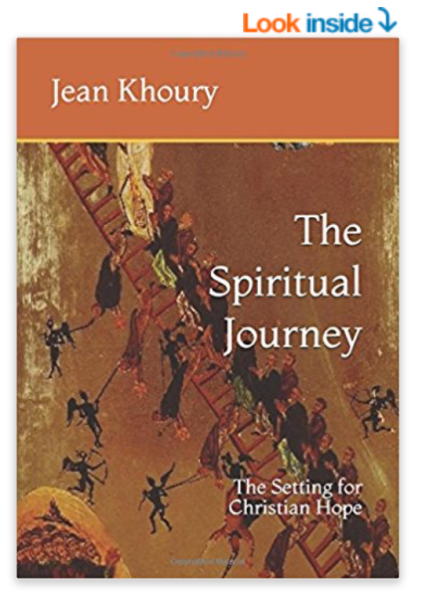
A book: The Spiritual Journey

This is a book that came out in 2003, sold only during the Courses in London:


The Setting for Christian Hope
____


Presentation of the book:


The Spiritual Journey, the Setting for Christian Hope is a milestone not only in Spiritual Theology, but more broadly for Christianity. Comprehending the full picture of the Spiritual Journey is essential for each Christian who receives Jesus’ call to follow Him. Having a clearer vision of Jesus as our Way in our call to holiness, allows us to embark with confidence in Jesus- the-Way and daily renew our act of Hope.

The author shares the fruit of his long research in Spiritual Theology, doing so with clarity, in accessible language, based on Jesus’ life and journey. A new understanding of the Gospel emerges, both convincing and captivating. The Journey of following Jesus can then start.

No Christian who prays or who loves Jesus and longs for the Holy Spirit can ignore this teaching.


“The more God wants to give, the more He makes us desire it.”
(St. John of the Cross, Letter XI, 8/7/1589)

“Oh it is incredible how all my hopes have been realised.
When I was reading St John of the Cross,
I beseeched God to realise in me what he says [...].”
(St. ThĂ©rĂšse de Lisieux, Yellow notebook, n°9 31/08/1897) 


The Spiritual Journey – reader’s review.

Upon emerging from the depth of Jean Khoury’s ‘The Spiritual Journey – the setting for Christian hope’, I became acutely aware of how vague and poorly defined much of my Christian thinking and practice had been to date.

‘The Spiritual Journey’ sets before its reader an account of the Christian ‘raison d’etre’ in a lucid, accessible way and, under the most capable and inspirational guidance of its author, we embark upon a journey of transformation.

Jean details the extraordinary meaning of our faith and – most importantly -  points us towards our true goal and the means by which to achieve it. He defines and illuminates the pathway to holiness (on this earth) setting down distinct milestones by which to chart our progress as we follow in Christ’s footsteps.

By drawing together the essential strands of Christian practice (prayer, the Eucharist, Lectio Divina, sacrifice, charity) with rich reference to the Scriptures and writings of the saints, Jean sheds a new, brilliant light on the real meaning of the Christian call to faith.

The work is uncompromising and highly challenging, demanding a radical shift in the reader’s  perception of what it actually means to follow Christ in everyday life.

It is essential, valuable reading for any Christian who wants to move beyond a lukewarm, pedestrian practice to embrace Jesus in His entirety and reap the rewards of God’s love for us on this earth.


M. K.


"I cannot thank you enough for this book which gives us a clear view of our spiritual journey. I am blown away to learn of this second stage of the spiritual journey about this "weight of love". Its beyond me to think there is so much more than I would have imagined after "acquisition of the Holy Spirit". The diagrams have been extremely useful in helping understand your text. I think it is necessary to re-read them a few times as there is so much depth in them!"

R. B.
  Here are the links to the different chapters of the book:

 6- The Spiritual Journey (Diagram 4)
 8- The Spiritual Journey (Diagram 5)
 9- The Spiritual Journey (Diagram 6)
10- The Spiritual Journey (Diagram 7)
11- The Descent (Diagram 8)
15- The Complete Journey (Diagram 11)

Thursday, 9 June 2016

148: How Can We Enter Into The Sacred Heart?

The Son Reveals the Trinity

The love of the Father for each one of us was so great that He sent his Eternal Son to us (John 3:26), caused Him to become incarnate and, in Him and through Him, the Father opened wide the Gate of the Trinity to each one of us. The Trinity is in fact our true Home.

What, then, is the process through which we enter into the Trinity? God accomplishes this process in a very specific way: through Baptism we are grafted onto the Son, invited into the presence and the embrace of the Father, and become part of their everlasting reciprocal Love which is the Holy Spirit. The Son Incarnate, in fact, is our true Temple, where we can meet the Father in the Holy Spirit.

So true is this that it impacts significantly on worship. This is why we always pray to the Father, through the Son, in the Holy Spirit. This is why the Priest summing up all worship says: Through the Son, with the Son and in the Son, in the Unity of the Holy Spirit, we give you all Glory and Honour. This also shapes the way we say the “Our Father”: we are in the Son, in the presence of the Father, talking to Him, through the Holy Spirit. It is only because we have been grafted onto the Son that we can say: “Our Father”; this is why the Father then distinguishes/hears in the sound of our prayer the very Voice of his Son and answers our prayers. We are, in a very real sense, in the Son who is God, worshiping, knowing and loving the Father who is God, and praying it in the Holy Spirit who is God, that is, praying it in a divine way. So clearly the Trinity is like a closed circuit. Nobody deals directly with the Father unless he or she is grafted onto the Son. This is an important part of the Revelation which the Son Incarnate came to bring us.

This revelation is stunning if we take an in-depth look. This is the reason for the Son saying to us that through his Passion He is going to prepare for each one of us, in Him our True Temple, a place (John 14:1-3). This is why the Son says that He is the “Gate”. Indeed He is the entrance Gate to the Trinity, our Home, our resting place (our Sabbath). This is why He says that He is the “Way” that leads to the Father.

Entering into the Life of the Trinity

The Lord himself gives us clues about the life of the Trinity, showing us that only God is God, and that one has to be truly “in God” in order to know God and love God. Psalm 36:9 in fact reflects this, saying: “(Father) In your Light (that is, the Son) we see the Light (that is, Yours)”. In the Gospel the Lord mentions this “closed circuit” flow of the Divine Life: “No one knows the Son except the Father, and no one knows the Father except the Son and those to whom the Son chooses to reveal him.” (Mt 11:27)

Now, if “only the Father knows the Son”, how then can we ever access the Sacred Heart of the Son and know Him? How can we enter into the Son’s Sacred Heart? The answer to these questions is clear: the Father Himself needs to reveal the Heart of His Son to us. To accomplish this the Father needs to give us a unique gift, an exceptional capacity: enabling us to embrace the Son, in fact, to be at his level. For the new Wine (Jesus’ Heart) we need a new Skin, that is, a new capacity to embrace Him. We need to be lifted up to the Spirit world from the flesh, in order to be at God’s level and worship Him “in Spirit”.

Knowing the Father now becomes possible if the Son reveals Him. The text above says “no one knows the Son except the Father”, and except “… those to whom the Son chooses to reveal him”. This certainly applies as well to the knowledge one can have about the Son (since the Son and the Father are one). Moreover, the knowledge acquired concerning the Son is given by the personal free choice of the Son. So it can be said that: Only the Father - and those to whom the Son chooses to reveal himself - do know the Son.

How the Son Reveals Himself

Now, how did the Son reveal himself to us? How did the Father present the Son to us? How did He make the Son known to us? In order to answer these questions in a satisfactory manner we need to explore an important point of our faith: Mary’s place in this process.

Mary is the New Eve

The Scriptures (1 Co 15:45; Romans 5:12-14) and the early Apostolic Fathers (St Irenaeus) see in Jesus the “New Adam”. This means that by the Grace of the Holy Spirit they were able to re-read the first chapters of the book of Genesis, seeing through the text, through the first Adam, to the New Adam, Jesus. So, suddenly, a text that seemed to talk to us only about the first Adam, starts to speak to us about Jesus the New Adam, revealing to us new depths that help us enter very deeply into the Mystery of God, of Jesus and of his relationship with Mary and with the Church.

Reading the Scriptures this way tells us that there is a unique relationship between the Son (the New Adam) and the New Eve. When the New Adam sees the New Eve, He can confidently affirm: “At last, she is bone of my bones, flesh of my flesh” (Gn 2). We can also say that He recognises that her heart is born from his Heart on the Cross. In fact Mary is the first Redeemed person. Plus, as we will see it, she is the Mother of all the Redeemed. As all the Redeemed come forth from the side of Jesus on the Cross, it follows that Mary, the Mother of Christ, will be the first to come forth from his Side. She is the Mother of the Church, therefore She takes precedence over everyone and subsequently generates the actual Church.

Eve's creation
When Jesus, the New Adam, contemplates Mary, He states that She is truly the sole and unique “helper” for Him who is “similar to him” (see in Gn 2 the characteristics of Eve).

“And the LORD God said, It is not good that the man should be alone; I will make him an help meet for him.” (Gn 2:28)

Two characteristics are sought: “an help” and “meet for him”. But nobody, no anima, and for us, no “just man” on earth can be “of a help” and “meet” for Him. We are all sinners, separated from God, after the First Adam’s fall. Just as with the First Adam no “helpmeet” similar to him was found, so too for God no “helpmeet” similar to Him could be found after the Fall other than in the New Eve: “But for man there was not found an help meet for him.” (Gn 2:20)

By contrast Mary knows Him perfectly, She loves Him perfectly because from Him she is taken (Gn 2: she will be called “woman” because she is taken from “man”); she is “bone of his bone, flesh of his flesh”, therefore there is a deep similarity between them stemming from the fact that she is “made of him”, “of one of his ribs”. Her similar flesh can understand his flesh, Her similar bone can understand his bones, “flesh” and “bone” being a concrete image indicating that they are of the same “make”.

As a consequence, only Mary’s Heart can perfectly honour the Heart of Jesus, because this heart is issuing from the Heart of Jesus on the Cross. This very deep Mystery encompasses the fact that Her heart is born from his heart/side, is similar to his heart, and is capable of containing/embracing his heart.

Having Children from God

But Mary is the New Eve, the “mother of the new creation” the mother of the new living in God, the Redeemed, for like Eve “She will be called Eve because she is the mother of the living”. This significant connection between the Old and New Testaments is summed up by “Living” and “Eve” being words of the same root in Hebrew. Thus the heart within her children will resemble Her heart. It will be, in truth, “flesh of her flesh”.

When the Holy Spirit says in Ezekiel: “I will remove the heart of stone and put in a heart of flesh” (Ez 36) let us remember that this heart “of flesh” is of the same flesh as Mary, who is of the same flesh as Jesus!

Added to this, when Mary generates in us the Life of God, Jesus’ Life, we can say that, in an indefinable way, we are given a heart like hers, an immaculate heart. Our heart, then, is conceived in her heart, through the workings of the Holy Spirit. If we prefer, however, we can say that “Mary’s Heart is given to us”, so that we can love Jesus with her Heart: “I will remove the heart of stone and put in a heart of flesh” that is Mary’s Heart now realised in us.

The deep mystery of the Eucharist now takes up this theme when we hear the words: “Take this and eat it,” “this” being “flesh of my flesh”! He who eats my flesh will have Life (see John 6:53). Significantly the word “flesh” is used here and not “body”.

Thus, when on the Cross the side of Jesus was opened, the Fathers of the Church saw there the birth of the New Eve from the New Adam’s pierced side: “Instead, one of the soldiers pierced Jesus' side with a spear, bringing a sudden flow of blood and water.” (John 19:34) The First heart that issues forth from the side of Jesus on the Cross is Mary’s Heart.

Then too, when the Fathers of the Church meditated upon the following verses they saw in them a Great Mystery: they saw Jesus, the New Adam, “sleeping” on the Cross, and having his side opened, and the New Eve coming out of it:

“And the LORD God caused a deep sleep to fall upon the man, and he slept; and he took one of his ribs, and closed up the flesh instead thereof: the rib, which the LORD God had taken from the man, made he a woman, and brought her unto the man. And the man said, This is now bone of my bones, and flesh of my flesh: she shall be called Woman, because she was taken out of Man.” (Gn 2:21-23)

This is a great Mystery, the mystery of the unique relationship that exists between Jesus and Mary. He knows her perfectly and more importantly she knows him perfectly.

God built (Gn 2:22 “built” and not “made”) Mary’s Heart from Jesus’ Heart on the Cross. Only the Father and She perfectly know the heart of Jesus. Her Heart alone, till now, has been capable of containing the One whom the heavens cannot contain (see 1 Kings 8:27). The “New Skin” only can contain the Divine Heart.

Like the Mother she is, Mary then begs Him to share the capacity of the New Skin, the New Eve, with others: “Give me children or I will die” (Gn 30:1), “They don’t have wine” (John 2). She wants to have children who will be capable like Her and with Her to contain His Heart and love Him in the same way she does. Children whose heart is “flesh of her flesh”, true children of hers.

Jesus, in turn, reveals Her to us by calling her “Woman” (John 2), which means: you are the “New Eve”, the Mother of His Children. When Jesus says “Woman” He alludes to that closed Mystery, that “secluded..sealed....locked Garden” (Mary, see Song of Songs 4:12), to “what is between you and me” (John 2)! What is between Him and Her is the central Mystery for us to meditate and ponder upon throughout the entire course of our lives. It is the entrance Gate to that knowledge of the Son that the Father (and Mary) alone have. By saying “Woman” Jesus, the New Adam, reveals the secret between Him and Her, the entrance door to the sealed circulation of Divine Life occurring between them.

The heart of this New Eve, is not only Immaculate, but it is important to recognise that it is also “immaculate” from the first moment of her Conception when she was saved from Original Sin. However, if we really go back to the true place of birth of her Immaculate Heart, we must necessarily go back to the moment when Jesus' heart was pierced on the Cross. She is Redeemed/Saved by Jesus being the first creature to come out of his pierced Side on the Cross. This is her birthplace, as it is ours. Immediately following this, we can affirm that her Heart is the birthplace of our heart. Psalm 87 beautifully sums this deep action up by saying about Mary: “all are born in Sion”... “in you all my fountains”.

The Church can only be the Church of Christ if she reflects the image and likeness of Mary, that is, if she offers her Spouse a pure faith (Virgin) and generates children by God and from God (Mother).