Showing posts with label intermediate goal. Show all posts

Friday, 26 January 2018

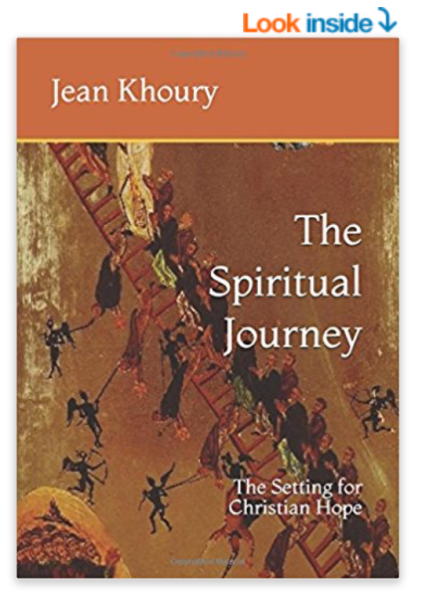
Paperback Book on the Spiritual Journey

Screen Shot 2018-01-26 at 00.31.39

"The Spiritual Journey, the Setting  for Christian Hope" is a milestone not only in Spiritual Theology, but more broadly for Christianity. Comprehending the full picture of the Spiritual Journey is essential for each Christian who receives Jesus’ call to follow Him. Having a clearer vision of Jesus as our Way in our call to holiness, allows us to embark with confidence in Jesus-the-Way and daily renew our act of Hope.
The author shares the fruit of his long research in Spiritual Theology, doing so with clarity, in accessible language, based on Jesus’ life and journey. A new understanding of the Gospel emerges, both convincing and captivating. The Journey of following Jesus can then start.
No Christian who prays or who loves Jesus and longs for the Holy Spirit can ignore this teaching.

This new edition has been revised and augmented. It has a new second part added to it.

Paperback from Amazon US, from Amazon UK

Tuesday, 24 July 2012

35: The Spiritual Journey 9/11


The complete shape of our Spiritual Journey

Recapitulation

We are continuing the discovery of the shape of our Spiritual Journey, of our spiritual growth, the new goal and the new stages. The last diagram (8/11) showed us a new part in our spiritual journey. It showed us that the goal of Christian life is not just to reach the “union with God-Jesus” (reaching the top of the mountain). It showed us that, after reaching the Union with Jesus-God, we still have a lot to do, like the Son of God himself when He took flesh. He didn't jut incarnate, he went much further, He realised a mystical union with each one of us, and the final step in this “mystical union” was our Redemption realised during his Passion, especially during the Crucifixion, bringing us from “darkness” to “Light”. We know how much this cost Him.

This is then for us a “turning point”. Our Journey doesn't aim only toward “candies” it aims as well (at the image of Christ's journey) toward Redemption, trial, real love. Instead of aiming to a higher point (God, the very Nature of God, a final Union with the immensity of God, the Beatitude, the Eternal Happiness), we change the angle, and start to look down, and start to “study” the descent... a descent toward a more intense, grounded, serious love to our brothers. We will learn it from Christ, and He will come in us to live it! Pursuing His mission through us.

There is no greater love than to lay our soul, our life, for our brothers and sisters, says Jesus. My new Commandment is to do as I did: to love as I did. You can't do it just by yourself, you can do it only if you are transformed in Me and Me in you. Otherwise you can't bare it, its too heavy! When the disciple will be totally formed, he'll be like his Master (and not “greater than Him”: just seeking Beatitude, not wanting to follow his footsteps). Saint Paul says it: “I am offered like a libation” (2 Tm 4:6), and “I complete in my flesh what lacks in Jesus' Passion “for his Body””. All the Apostles went through martyrdom (even John who didn't die from it, went through it). The perseverance in the imitation of Jesus should reach its full realisation, reaching its end goal.

So, when we reach the Union with Him, we are like brought to the point of His Incarnation (when the Son of God takes flesh). We are ready to start the journey of collaborating with Him in the work of Redemption, or more precisely: we are ready to take our share in the application of the Redemption He acquired for each one of us on the Cross, in its application to the rest of the human beings, our brothers and sisters.
The work of “acquiring” Redemption depends totally on Him (because He is the only being who is in the same time God and man, therefore the only Redeemer), but the work of “application” depends on His Mystical Body, us. This is His choice and His will, out the of the mystery of His love for us. He wants us to work with him, to take our share in the work of salvation of our brothers and sisters (its application).

It is already a great love for us, His love that makes us be united with Him (reaching the top of the mountain). But there is even a greater love : to make us share His work of Redemption, so we can work on applying it to our brothers and sisters, and be part of the their salvation.


The full shape of our Journey

The full shape of our Journey is to complete both parts of the Journey: ascending, and descending. With this diagram, we can start from now to see the full shape of the journey: we start our ascent from the bottom of the mountain, we climb the Mountain (Christ himself), being purified by the Holy Spirit, step by step, until we reach the Union with Jesus, and then after a while we start our descent, attracted by the weight of Charity, heading toward a greater love of our brothers and sisters.
Again, going up we are following Jesus' journey in the Gospel, receiving the purification from Him, and going down, we are following Jesus' journey in the Gospel, but this time, He is in us and us in Him, giving Him to our brothers and sisters, participating in their growth, purification, reception of the Redemption realised by Christ.

The full shape of our Journey

Both ways we meet Jesus, His Mission and His Passion; we follow the same journey of His. The first part by receiving Jesus, and the second by rather giving Jesus to our brothers.

We are all invited to reach this great love:  There is no greater love than to lay down one’s life for one’s friends.” (John 15:13)

(To be continued...)

Thursday, 5 July 2012

32: The Spiritual Journey 6/11


With this 6th diagram (see below) our presentation of the Spiritual Journey has a turning point. We are not anymore addressing just "Jesus' Journey in us", and "His Action in us", we start to consider our own journey, as a direct result of Jesus' Action in us.
As you will recall, this series of diagrams is meant to present and explain the total shape (topography) of our "spiritual journey". We had first to see Jesus' Journey, Jesus' action in us, because it shapes our future Journey. His journey is inseparable from ours.
Now that we clarified Jesus' journey, we start to focus on ours (our "spiritual journey" is rooted in Jesus-our-Way). This is why the diagram has an ascending curve. We are climbing the Mountain of Perfection that leads to the Union with Jesus-God. We are going upward.


  • The Goal of Spiritual Life


You may notice at first that the goal of the ascent is not God himself (the Divine Nature). This would mean that the top of the mountain goes directly to the Trinity. Here, you have a slight difference. But in fact it is not a small difference, it is a very important and big difference. We aim to reach Jesus, the One who is “perfect God” and “perfect Man”. Our ideal is to be united with Him, to be like Him, so our life on earth becomes an extension of His Life. He is our ideal, because He is not God only, but Man as well (“Son of Man” says the Gospel). Our ideal is not to reach something beyond Him. In Him we find the fullness of Divinity and we get ready to our journey of greater service, with Him and in Him.

  • Note: many authors did make the mistake of putting that in spiritual life we aim to reach the “Union with God” and then after we die. But “God” here, understood as the goal of our life (union with God) is not precise, and can mislead. We cannot have as an ideal a Being that is not incarnated. We cannot put an end to our spiritual life right after the “union with God”, this is not what Jesus wants from us: the perfect disciple follows the example of His Master. All the Apostles did die like their Master. This “deviation”, or incomplete initial vision of the journey of spiritual life did happen because of many factors: one of them is the influence of Greek philosophy during the first centuries of Christianity. Their ideal was the “theoria”, or “Theology”, which is to reach the One, God, and contemplate Him. This is not at all wrong (this is why it was widely accepted as a christian position) but it is incomplete.


In fact, we want to reach Jesus, the fulness of Jesus, the fulness of his height, as saint Paul put it. And “reaching Jesus” is not the final stage of our spiritual life. We want to be “in Jesus” and “Jesus in us”, alive and acting, in order to continue His mission on earth and reach the “fullness of love”. This is the real final goal.
In the Journey of our spiritual life, we have then like two poles/goals:


  1. to reach the top of the Mountain: the union with Jesus: I no longer live, but Christ lives in me” (Ga 2:20)
  2. to reach the bottom of the Mountain: the fullness of love: “I complete in my flesh whatever remains of the Christ's sufferings on behalf of his body, which is the church.” (Col 1:24) All this, especially the second part of our spiritual journey, will appear in the coming diagrams.


This is why, already in this diagram, the arrows that symbolise Christ's Journey and our spiritual journey, not only do unite in the end (Christ starts to live and act in us), but the tip of the arrows does point downward (and not upward). It is anticipating the journey of descent, at the image of Christ who, being fully man, did choose for our sake and for the sake of our salvation, to descent more: Christ "who, being in very nature God, did not consider equality with God something to be used to his own advantage; "Christ Jesus: rather, he made himself nothing by taking the very nature of a servant, being made in human likeness. And being found in appearance as a man, he humbled himself by becoming obedient to death even death on a Cross!" (Phil 2:5-8) We can say that reaching the “Union with Jesus”, we do not consider our union with Jesus-God something to be used to our own advantage... we humble ourselves, by becoming obedient to Jesus' command, imitating Him, to death, a death on a Cross.


  • 6 stages


For now, let us focus on the ascent, and how it happens in us, how it follows Jesus' life as it is presented in the Gospels, as we saw it in the previous diagrams.

6- Jesus' influences along the Spiritual Journey


As we can see, for now, we have at least 6 stages in our spiritual life, that coincide with Jesus' Journey in the Gospels. Remember: the journey of Peter and the Journey of Jesus are matching: in each stage, Christ has a more specific action on the apostles and his followers. On the Diagram above, you can notice the two lines of ascension: Christ one (in darker colours) and ours (in clearer colours). You can see the little arrows that rise from Christ's line to ours, they symbolise the mystical transformative Action of Jesus in us, in each phase.

  • Note: Of Course, Christ is free to act in the order He wants, according to our need seen by His Wisdom. Normally though, He acts this way: from the most exterior part of us to the deepest. Purifying us, step by step, going deeper, changing the way He acts (from the “milk” to the “solid food”), the intensity of His Action grows, since the purer we are the less obstacles we oppose to His Action in us.


Here are the 6 stages of the journey that we can discern for now (we will explore more stages later), and they follow the description of the majority of the Spiritual Masters who mentioned the steps of our spiritual journey (saint John of the Cross and saint Theresa of Avila):

  1. First part of Jesus ministry: “Purification of the Sense”
  2. Second part of Jesus ministry: Turning point, Peter's Declaration, Jesus predicts his passion and death, Jesus heads towards Jerusalem: “Purification of the Soul” (emotions)
  3. Third part: Jesus enters in His Passion: “Purification of the Spirit”
  4. Fourth part: Jesus dies: ends of the purification, “Spiritual Betrothal”
  5. Fifth part: Jesus Rises, Appears for 40 days, Ascends into heaven at the Right hand of the Father: “Spiritual Marriage”
  6. Sixth part: Pentecost: the Coming of the Holy Spirit: the Living Flame starts to Sparkle. Acquisition of the Holy Spirit.


If Jesus' action in the first 3 stages is of "purification", the 4th is more of illumination, and the 5th of Union. This is according to the classical division of the journey inherited from Greek Philosophy.

(To be continued...)

Thursday, 21 June 2012

21: Defining Spiritual Theology 2

Let us continue to define “Spiritual Theology" (ST).


1- ST takes care of our Spiritual Life

The object of Spiritual Theology: our Spiritual Life. It is meant to take care of our spiritual life, its growth, its healthy and steady state.


2- ST manages a relationship between Christ and each one of us

Our Spiritual Life is the life of God in us, Jesus' life in us. This life is generated by the combined action of two persons: Jesus and each one of us.
This is why it is important to know what Jesus wants to achieve, how He works, what he wants. And it is as important to know 'how a human being can answer to His Call', reply to him, act, react, in a synergetic, harmonious, way.


3- ST's goal is to make our Spiritual Life grow

Spiritual Theology has various goals. Final, remote goals, and daily goals. It is only by achieving the daily goals that we can reach the final ones.


3.1 Final Goals: 1- Union with Jesus, 2- Fulness of Love

Spiritual life has two main goals:
1- Reaching first the top of the Mountain of the Union with Jesus Christ, God.
2- Reaching, with Jesus, and in Jesus, the bottom of the Mountain, serving our brothers and sisters reaching the fullness of love.


3.2 Intermediate Goal: each day, achieving 'the daily measure'

The intermediate Goal is each step we make, in order to reach the final goal. We have three measures in spiritual life: the act and the day (you may add 'the week').
- The act, any act, we make during the day should be synergetic. It should be done from Jesus, with Jesus, achieving Jesus.
- The real measure though is the day. Today's effort is enough for today” (Matthew 6:34). I chose to translate here: “effort” and not "trouble" or other words. Showing that there is a measure of correspondence to the Holy Spirit we are called to achieve everyday.

No doubt the lectio divina, and the lectio divina well made, helps us achieve that goal, of adding every day one more synergetic act. Jesus states it: you can't do anything without me (John 15). He invites us to imitate Him by contemplating the will of God and then by his Grace putting it into practice. Lectio divina is completed by the Prayer of the heart. Like sun and water nourish the tree, Lectio divina and prayer of the heart, respectively, nourish us.

It is by accomplishing the “intermediate goal”, the measure of the effort of each day, that our Spiritual Life grows in us and that we can reach the final goals, otherwise, we are not growing properly.


4- Recognising the stages of Spiritual Life

When a mother has a baby, she starts to go, on a regular basis to a paediatrician, because she needs to know if her baby is healthy, doing well, growing … She doesn't always have all the sufficient knowledge in order to take care of her baby.
In the meantime, the Paediatrician has enough knowledge and experience in order to be able to do this checkup. He/she measures and weighs the baby and performs all sorts of checkups in order to be sure that the baby is growing. The Spiritual Master does almost exactly the same work. The faithful goes to him, in order to show his/her inner life and practices. Like the mother goes with her baby.


4.1 Knowing the stages

As the Doctor knows the 'normal' stages of growth of the baby, the 'Spiritual Master' knows them as well. Without knowing the stages and what characterises them, the Doctor cannot ensure the check up, cannot ensure that the baby is healthy and that all is fine. It is the same for the 'Spiritual Master'. It is part of his/her training to know the stages of spiritual life. This comes with study and learning.


4.2 Recognising the stages

One thing is knowing the stages, learning them (scientifically, theoretically), and the other is being able to re-cognise them. This comes with a lot of experience and discernment. The future Master has to become first a Disciple, for various years, in order to receive the discernment. Otherwise it is simply 'hell' (a great confusion). This is a very delicate art, and mistakes could be done very easily.
The “eyes” of the future Master, 'the capacity to see', and then 'the capacity to discern' have to grow. This can only happen under a training with another Master. It is the transmission of the living Tradition of Spiritual Masters.


Reflections

I think, that these simple lines, help define the framework of Spiritual Life and Spiritual Theology.
Wondering too much out of that framework can create confusion and loss of time and energy.

After reading these few lines, you can easily conclude that this "science" (Spiritual Theology) is the queen of all sciences, or better said: if you still consider 'Spiritual Theology' as a branch of Theology (it is your right to do so), wouldn't you consider that this Branch (ST) is not only a fundamental branch, but the Queen of all Branches of Theology? Anyway, the most useful one, the one that most of the faithful claim, wait for, and hardly receive in their lifetime. Look around.

Wouldn't you then wonder : where did it go in the big forest of Theology?
Why Theology divorced from Spiritual Theology? (I thought in the Catholic Church we didn't have divorce !!!!!) The actual Pope laments this divorce and is trying his best to mend it!

Why Spiritual Theology today is a 'half-dead' body lying on the road? (see the Parable of the Good  Samaritan Luke 10:30)

Ok, I will stop lamenting, and get up early, and work, work, work, in this Field - with the Help and the Guidance of the Holy Spirit. This is My CREED.