Showing posts with label Sermon on the Mount. Show all posts
Showing posts with label Sermon on the Mount. Show all posts
Sunday, 10 April 2016
Groundbreaking Course on the Sermon on the Mount


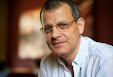 Jean is a French Catholic Theologian, specialised in Spiritual Formation, with more than twenty-five years of experience with Consecrated and Lay people. He obtained his Bachelors in Philosophy and his Masters in Spiritual Theology from Toulouse (France), and the Teresianum (Rome). He is presently completing his Ph.D. in Spiritual Theology at the Angelicum (Rome). Jean’s formation was greatly enhanced by the discalced Carmelite Fathers.
He has lectured in Spiritual Theology in different universities with a practical focus. Many articles, studies and books have been published internationally. In 2003, Jean founded the "School of Mary" which offers formation in Spiritual Life, many video courses being available at www.schoolofmary.org . Lectio Divina and Contemplative Prayer are amongst the most important forms of prayer addressed.
Jean gives Spiritual Direction on a regular basis and also gives retreats. He is married, has a daughter and is based in London.
Jean is a French Catholic Theologian, specialised in Spiritual Formation, with more than twenty-five years of experience with Consecrated and Lay people. He obtained his Bachelors in Philosophy and his Masters in Spiritual Theology from Toulouse (France), and the Teresianum (Rome). He is presently completing his Ph.D. in Spiritual Theology at the Angelicum (Rome). Jean’s formation was greatly enhanced by the discalced Carmelite Fathers.
He has lectured in Spiritual Theology in different universities with a practical focus. Many articles, studies and books have been published internationally. In 2003, Jean founded the "School of Mary" which offers formation in Spiritual Life, many video courses being available at www.schoolofmary.org . Lectio Divina and Contemplative Prayer are amongst the most important forms of prayer addressed.
Jean gives Spiritual Direction on a regular basis and also gives retreats. He is married, has a daughter and is based in London.
Wednesday, 12 December 2012
62: The practical use of the Dogma of the Immaculate Conception #2
 |
| Immaculate Conception |
(continuation of previous post)
To me, the historical context of the proclamation of the Dogma of the Immaculate Conception of Mary is very important in order to understand it fully, and we should strive to understand the “political”, practical, thread in it.
To me, the historical context of the proclamation of the Dogma of the Immaculate Conception of Mary is very important in order to understand it fully, and we should strive to understand the “political”, practical, thread in it.
Again,
being specialised in “Spiritual Theology”, I am essentially interested in the
practical spiritual impact of the Proclamation of a Dogma, any Dogma.
First: what is a “Dogma”?
The
word “Dogma” we use, is a word inherited from the Greek Philosophers. A dogma for them is a universal principle which founds and justifies a specific practical
conduct, and which can be formulated in one or in several propositions. A Dogma
(especially amongst the Stoic Philosophers) is like a sentence of practical
wisdom that one will meditate, ponder upon, and put into practice: it
essentially impacts the daily life.
The use
of the word “dogma” crossed from the cultural philosophical use amongst the
Greeks to early Christians.
- Was
that an error? Would that have meant a deviation of the right understanding of
Jesus’ message?
- I am
not sure it is the case. Let us have a closer look.
For early
Christians (the first centuries), the “dogmas” were something very practical. It
appears as well to be the same for the non-Greek christians: the Apostles themselves who
were Semites.
A very early example of the implicit use of the idea
of a “dogma”
See
for instance how saint Matthew in his gospel presents the Trinity as a “Dogma”,
i.e. as something to put into practice. The Sermon on the Mount (Matthew
5-7) is the Great Charter (Carta Magna) of the newly baptised. Remember we are baptised (i.e.
immersed) in each Person of the Trinity. In the Sermon of
the Mountain, saint Matthew dedicates a section for each person of the Trinity:
Mt 5:17-48 is offered to put the Son
into practice, Mt 6 is to help us put the Father into practice, and Mt 7 is for us to put the Holy Spirit into
practice. Each Person is a “dogmata”, not a sentence thought, but a Person
in whom we are supposed to meditate upon, to enter, to be immersed in.
“Being
Baptised” meant simply that the Father did Baptise (immerse) us, in the
Trinity.
- How would
this happen?
- For
the first Generation, God the Father was considered to have like two hands: st
Irenaeus says that the Son and the Holy Spirit are the Hands of the Father
(remember that Irenaeus is disciple of the disciple of saint John). So “Baptism”
would be seen as follows:
The Father takes us in His Hands and holds us tight:
as a result we shouldn’t escape from His hands. How? But a set of practices
that would help us remain immersed (baptised) in the Son, in the Father and in
the Holy Spirit (in that order, see 2 Co 13:13).
To “be Baptised” for the first generation of Christians implied to
put into practice the Three Divine Persons of the Trinity. The “Dogma” of the
Trinity was practical and vital.
Therefore
for the Catechesis of the first Christians (i.e. the Sermon of the Mountain), a
whole chapter was dedicated to approach each Person of the Trinity in a
practical way.
For a
mnemonic reason, remember that each hand has 5 fingers, so you’ll find the 5
points (one per finger) to remember about the Son in Mt 5 and the same for the
Holy Spirit: five sections in Mt 7.
Easy
to count, easy to remember, easy for meditation, easy to put into practise. The
whole “Greater Charter” (Carta Magna)
of Christianity, i.e. the Dogma of the Trinity, is all comprised in this Sermon,
the Sermon of the Mountain.
The historical background of the dogma
- Would
dogmas change?
- Obviously:
no.
- Would
we have new dogmas?
- Obviously:
no.
- So
why do we have “new” dogmas?
- We
don’t. We just proclaim a truth as a “dogma” when we see it, after a long
development, under a clearer light. (Theological note: Even if it is the Pope who proclaims a Dogma, the proclamation is an act of all the Church, as you'll see below, the Pope makes a consultation first in order to "sense" the "feeling of the faithful". The infallibility of the Pope draws its principle from the infallibility of the Church and not vice-versa.)
I
would ad to that last reply something important to my eye: a Dogma, as we just
said, has a direct practical use to it. It is not “one more truth to proclaim”,
it is one more thing to put into
practise, one more thing we already put into practise but the use of which
today is much more urgent, this is why it is underlined by the Faithful, the
Church, the Pope.
- So
why that urge to proclaim Mary as the “Immaculate Conception”?
- This
is exactly my point: the historical context of the proclamation is very
important to understand the reason and mainly its application in daily life.
Let us
remember few facts that will help us situate historically the “proclamation” of the Immaculate Conception of Mary by Pope Pius IX:
 |
| Pius IXth |
1- Pope
Pius the IXth is witnessing the end of the “Middle Age” political system,
and the new spirit of the French Revolution invading the spirit of the Italians
and most of Europe.
2-
These changes are quite drastic and, with all the good will of the Pope, are seen
and felt as a threat to the normal order of things.
 |
| Pellegrino Rossi |
3- The Pope’s life is under serious threat. His Prime Minister, Pellegrino Rossi, has been assassinated (15th of November 1848), the Swiss Guards are disarmed, making the Pope to a prisoner in his palace.
Then on the 24th of November 1848, the Pope then escapes in disguise as a regular priest to Gaeta,
in the Kingdom of the Two Sicilies
leaving Rome to the radicals and the mob.
4- At
Gaeta, in a very small crypt, the Pope prays during 9 months. He had a great
devotion to Mary under the name of the “Immaculate Conception”. (You can visit
the Church (“Santissima Annunziata”) and the crypt also called “Cappella d’Oro”)
 |
| Cappella d'Oro in Gaeta where Pius IX prayed for 9 months |
It is
during this time that the Pope formed the decision to start the process of
consultation that will lead later to the declaration of the Dogma of the
“Immaculate Conception”. He published
his Encyclical Letter, “Ubi Primum”,
the 2nd of February 1849 to the bishops of the Catholic Church
asking them for opinion on the definition of a dogma on the Immaculate
Conception of the Virgin Mary.
The Pope remained in Gaeta till the 4th
of September 1849.
Time of total distress
The Pope’s
Prime minister is killed, his life is under threat, he has to escape, and he
does it in disguise. This tells us the
degree of distress the Pope is in.
It is
quite obvious that the only practical help he could find was in Mary, not only
that, but “Mary the Immaculate Conception”. In a situation of darkness, of
total darkness, where the future of the Church is under serious threat, the
traditional political order is upside down and threatened to disappear, where
evil is trying to kill… the Pope turns in prayer to the Immaculate, the only
Creature after Jesus that was never defeated by Evil. We can say that the Pope
found the solution for his distress.
Do you
see the practical, spiritual and political situation in which is born the
desire to proclaim solemnly Mary as the “Immaculate Conception”?
He is
in fact declaring that he found The Solution for his distress, he wants to
present the solution, and he wants to say what happened to him and how she
helped him.
He
wants to say that this is the will of God to put in the Centre of the Church
the First Sign of His Victory, the New Eve, the one that was never defeated by
Evil. She is at the heart of the Church, real source and proof of Hope that God
gave us.
You’ll
notice that in the definition of the Immaculate Conception, it is said that
this “grace”/ privilege comes directly from Jesus’s salvation, from Jesus’
Cross. I like to see Her, first Saved Person, and mother, with Him, of all the
saved, I like to contemplate Her coming out of His Side, New Eve, totally pure.
The
first sign of Jesus’ victory on the Cross is Mary. The prototype of all the
Saved people, is Mary.
The
mother and the “Mould” of all the saved, is Her as well. She generated the
Head, and generates each person in the Body.
God
put this Sign (the Immaculate) right
in the centre of his Church. Mary is the only one who believed (see previous
posts), Mary is the Prototype of Jesus’ Disciple and follower (see previous
posts).
All of
us, like the Pope and like that moment in the history of the Church, we reach the darkest point in our spiritual
journey, and we all lift our eyes, in the darkness, to the Star of the Sea, Mary, the
Only Immaculate Point in the Dark Sky, “gift of Jesus for us”, “capacity to
believe” given by Him to us.
The role of Immaculate in the “Dark night of the
spirit”
Now
this is more technical here. According to saint John of the Cross, the “Dark
night of the spirit” is the deepest and final purification the faithful should
go through before reaching the “Union with Jesus” (See his book "The dark night", especially the second part). You might recognise it in
the “Great trial” mentioned in the book of Revelation (Rev 9:14-17) or find it in
a more plain way in: what the Apostles (or any Jesus’ follower) have to go through
when Jesus is about to start his Passion: all your hopes about the Messiah-Saviour
will vanish, all your life, your spiritual life seems to go and disappear in
the land of oblivion.
 |
| Ven. Fr. Marie-Eugène |
Now, a great catholic Master, the Venerable Fr Marie-Eugene of the Child Jesus OCD (1894-1967) (his process of Beatification is on the verge of reaching completion), in his great book “I want to see God”, says that Mary plays a fundamental role in this crucial moment were everything in our “spiritual life” seem to disappear. He quotes saint Louis-Marie Grignon de Montfort, saying that the presence of Mary all together 1- makes that time of deep purification lighter, more bearable, and 2- is essential for this turning point in our spiritual life (the deep purification). In fact, for the first time, we are called to make a pure act of Faith, and in order to do so, we learn to use “Mary’s faith”, or better said: we ask her to “believe for us”. In doing so, we let her grow in us, and transform our spirit at the image of hers, being now for the first time capable of “believing as she believes”.
We are
then starting to follow “the only one who believed in the Resurrection”, “the
one around whom the distressed apostle gathered in order to draw from her the
pure faith in Jesus”.
In a
way, pope Pius the IXth is saying to us: in these great times of
distress, the Church continues not with the strength of papacy, or any human strength,
but through the help God put in Mary, the Immaculate. God had his victory in
her, and is offering to each one of us this same Victory, by putting Mary in
the centre of Jesus’ faithful. Mary said “Yes” to God in the darkest moment of
history (when Jesus is dead): she believed in the Resurrection; and God gives
us her “Yes” so we can use it and overcome the darkness. (Note: John-Paul II made all this very clear during his Pontificate)
Does
it make more sense now to believe that Mary is Immaculate Conception? Do we see
better how practical is that “dogma”?
Jean is a French Catholic Theologian, specialised in Spiritual Formation, with more than twenty-five years of experience with Consecrated and Lay people. He obtained his Bachelors in Philosophy and his Masters in Spiritual Theology from Toulouse (France), and the Teresianum (Rome). He is presently completing his Ph.D. in Spiritual Theology at the Angelicum (Rome). Jean’s formation was greatly enhanced by the discalced Carmelite Fathers.
He has lectured in Spiritual Theology in different universities with a practical focus. Many articles, studies and books have been published internationally. In 2003, Jean founded the "School of Mary" which offers formation in Spiritual Life, many video courses being available at www.schoolofmary.org . Lectio Divina and Contemplative Prayer are amongst the most important forms of prayer addressed.
Jean gives Spiritual Direction on a regular basis and also gives retreats. He is married, has a daughter and is based in London.
Tuesday, 9 October 2012
49: Setting up the foundations of Spiritual Life
Should we start the formation in Spiritual Life with the "First Level Course", or by an Introductory Course, laying the foundations of Spiritual Life?
I
would like to point out to the fact that not all christians are
"ready" for the "First level Course" teaching
(please click here to see the Syllabus of the first level course: Initiation
into Spiritual Life)). Normally people should go first through a
previous teaching: The Foundations of Spiritual Life. Exactly like
saint Teresa of Avila went through them, in the three first Mansions
of the Interior Castle (In fact the teaching of the First
Level Course starts at the Fourth Mansions).
What
fosters this thought is what the Lord himself did with the Rich Young
man: when he asked for "Eternal life", Jesus didn't
immediately direct him toward "perfection", i.e. toward
"following Him" (He didn't call him). Strangely (but wisely) He first checked up
if the "foundations" are ready, strong and sound: "did
you practice the Commandments?" He said to the young man. I
still do believe that we can and have to check if the "foundational
structure" of the persons who want to follow the First
Level Course is "completed".
Because if before the right time one starts to give the "Pearls"
of the Fourth Mansions, one can just later throw them and go ("Do
not give dogs what is sacred; do not throw your pearls to pigs. If
you do, they may trample them under their feet, and then turn and
tear you to pieces." (Mt 7:6)) .

In
order to ensure that the "foundations" are sound, we may
have to work a little bit with the First and the Third parts of the
Catechism, or just take the Three first Mansions of Teresa of Avila's
book: The Interior Castle.
Question:
Reading what you have just said again and again I have just been
thinking if it would not be better to focus completely on the Catechism for a semester and work on giving the “Pearls” the
following semester? I know you prefer not to change anything for now
but surely there can be no harm in strengthening the foundations
first so that people can be more receptive to the more “advanced”
material.
Answer:
Setting up the foundations for Spiritual Life doesn't mean that God
the Father and Jesus are not present and active right from the
Beginning of the Journey. We won't ask people to become "Jewish"
first, then, when they fulfil the Commandments, we turn them toward
Jesus.
We
only have to accept that in Christian Life we have like two phases:
1- Before the "Second conversion" and 2- After the "Second conversion".
Note:
The "Second conversion" is to receive Jesus' call to follow
Him from Closer. It means that as an adult, I do discover the "personal
relationship" with Jesus, feel His Call, and decide, by His
Grace to follow Him... (The "first conversion" is to become
Christian.)
*
Theresa of Avila in the Journey she offers us toward Perfection (Union with Jesus), sets 7 steps. The
first one is to enter in the Castle (to enter in ourselves, in our interior. Jesus lives in our centre and often we are outside of ourselves)). The Fourth
step, is to enter in the "Personal Relationship with Jesus";
she calls it "the supernatural", and she means by that that
the way the Holy Spirit is communicating Himself to us is new, more
powerful, direct and personal. But you need to notice that all the
book is written to her nuns. Technically, any nun should be placed
after the Fourth Step. Strangely, when she writes to them, she does
go through the 3 first steps: 1- people who are out of the Castle, 2-
people who enter in the first mansions (that are still quite dirty)
in the Castle and 3- People who put some order in their christian
life.
*
Saint John the Evangelist does the same. Before receiving Jesus' Body (John 6) and embarking with Him (passing the sea, John 6), there are 3
fundamental Signs:
1-
Cana of Galilee, 2- Healing the son of the officer (and the officer)
3- Healing the paralysed man (38 years of paralysis). So, from the
beginning, Jesus and Mary are present.. From the beginning (even if
nobody knows yet who is Jesus) Jesus performs miracles, heals,
prepares the human being to follow Him (there are levels of depths in "following Jesus").
Laying
down the foundations of Spiritual Life, we have to understand that we
can't just drop Jesus and Mary. Of course, technically, the modality
in which the Holy Spirit acts is "softer", we call it the
"general help of the grace of God". It is a preparative
grace, to THE grace, which is "receiving the Holy Spirit
Himself", THE grace of entering in a direct and personal
relationship with Jesus.
*
And if you go to the Sermon on the Mount in Matthew (chapters 5
through 7), you have the whole Trinity present: the Son (chapter 5),
the Father (chapter 6) and the Holy Spirit (chapter 7). Of course the
action of the Trinity will develop and mature later, with the
Parables, and then with the Passion of Jesus, but still, the Trinity
is right from the beginning, and the Grace of Jesus is mentioned
right from the beginning. We can't set two types of Baptisms (even if
the people who lived in Jesus time had John the Baptist who opened
the way, and then Jesus), one would be the "first conversion",
more like a Jewish Christian life, and the "second conversion":
meeting Jesus.
Instinctively,
I would respect the fact that saint Matthew, saint John and saint
Teresa of Avila chose to put everything right from the beginning.
In
one word, this means: I wouldn't drop the teaching of the First level
Course for the sake of laying down the foundations for Spiritual
Life. I would do both, together, in parallel (combined), in order not to deprive
anybody from the Grace of Jesus and the precious knowledge that there
is plenty to come... "grace upon grace".
I
hope this helps
Jean is a French Catholic Theologian, specialised in Spiritual Formation, with more than twenty-five years of experience with Consecrated and Lay people. He obtained his Bachelors in Philosophy and his Masters in Spiritual Theology from Toulouse (France), and the Teresianum (Rome). He is presently completing his Ph.D. in Spiritual Theology at the Angelicum (Rome). Jean’s formation was greatly enhanced by the discalced Carmelite Fathers.
He has lectured in Spiritual Theology in different universities with a practical focus. Many articles, studies and books have been published internationally. In 2003, Jean founded the "School of Mary" which offers formation in Spiritual Life, many video courses being available at www.schoolofmary.org . Lectio Divina and Contemplative Prayer are amongst the most important forms of prayer addressed.
Jean gives Spiritual Direction on a regular basis and also gives retreats. He is married, has a daughter and is based in London.
Tuesday, 28 August 2012
44: The rich young man / Perfection
The rich young man
“- Now someone approached
him and said, "Teacher, what good must I do to gain eternal life?"
- He answered him: "Why
do you ask me about the good? There is only One who is good. If you wish to
enter into life, keep the commandments."
- He asked him: "Which
ones?"
- And Jesus replied: "
'You shall not kill; you shall not commit adultery; you shall not steal; you
shall not bear false witness;
honour your father and your mother'; and 'you
shall love your neighbour as yourself.'"
- The young man said to
him: "All of these I have observed. What do I still lack?"
- Jesus said to him:
"If you wish to be perfect, go,
sell what you have and give to (the) poor, and you will have treasure in
heaven. Then come, follow me."
When the young man heard
this statement, he went away sad, for he had many possessions.” (Mt 19:16-22)

This passage
from the Gospel is fundamental. We already addressed it in "Spirituality 23: Fortitude and sacred…" you may come
back to it. And now, let us continue to deepen it.
Why this text is
important for us Christians? It is important because it places us at the exact junction
(or line, or threshold) between the “First Covenant”, and the “New Covenant”,
between “being Jewish” and “being Christian”, “following Moses” and “following
Jesus”. In doing so, it helps us see the exact difference between the two
“economies”*. Otherwise, if we don’t see the difference, why are we Christians?
Note: “economy” is a theological expression that
means the way God is dealing with us, the means He gives us. For instance we
can say: “the Economy of God in the Old Testament”.
This great text helps
us avoiding “being Christian” only by name. Indeed the great risk for us
Christians is to become lazy, which means to become technically “Jewish”, not
using Christ’s Salvation, and the Holy Spirit.
The difference between
the two Covenants, the two Economies, is huge, and should be huge as well practically
in our life.
This text of
saint Matthew helps us as well learn the possible differences between “Christianity”
(real alive Christianity) and any other religion. So hopefully one can live by
this difference, taking advantage of it, and living it to the fullest.
Otherwise, why being Christians? We might as well adhere to any other religion.
Some people
might think that this text is offering us Christians two ways of “being
Christian” and therefore creates two categories of Christians:
1- the normal
plain people, who live by the Moses Commandments and
2- the people who
hear the “call for Perfection” and follow Jesus from closer (consecrated people).
This means that
the first lot are still following Jesus but not from close. In fact, for
centuries, we made two classes of Christians: the ones who are called to
perfection, to holiness, who follow Jesus from close and “the rest of the crowd”,
who follow Jesus, but from a certain distance, people who will just have the
chance, last minute, to jump into paradise when they’ll die. Saved only by an
inch. As if God was calling some, and others no! As if some are born with more muscles, so they can reach Perfection, and others are doomed right from the start!
Of course this
duality, this dual vision is wrong, and, thank God, the Holy Spirit, talked to
us, through the Council Vatican II and reminded us that the Perfection that
Jesus is bringing us, that Holiness, is for everybody. Everybody is invited to
Holiness, it is not for an "elite"!
This text of
saint Matthew is not the only text that addresses the difference between being
Jewish and being Christian, or, if you prefer: between from one hand being “lazy
Christian”, a Christian who doesn’t use all the goodness of Christianity and
the Gift of God, and from the other hand being a real Christian.
The first one is
not mystic, and the second is definitely mystic.
The Apostles,
right from the beginning, felt the urge to clarify the difference, because they
saw the richness that Jesus is bringing, and they saw that many seemed to
follow Christ but didn’t get to experience these richnesses. Remember in
the book of the Acts when saint Paul met people who were following Jesus, who
heard of John the Baptist but didn’t receive the Holy Spirit. Here is the text:
“Paul passed through the inland country and came to
Ephesus. There he found some disciples. And he said to them, “Did you receive the Holy Spirit when
you believed?” And they said, “No, we have not even heard that there is a Holy
Spirit.” And he said, “Into what then were you baptized?” They said, “Into
John's baptism.” And Paul said, “John baptized with the baptism of repentance,
telling the people to believe in the one who was to come after him, that is,
Jesus.” On hearing this, they were baptized in the name of the Lord Jesus. And
when Paul had laid his hands on them, the
Holy Spirit came on them, and they began speaking in tongues and
prophesying.” (Acts 19:1-6)

So the Apostles felt
the need to clarify that huge risk of living a Christian life only by name, and
not having the experience of the Holy Spirit.
Saint Mathew,
for instance, built his Sermon on the Mount explaining how each Person of
the Trinity enters in our life, influences it and changes it (the Son (chapter
5), the Father (chapter 6), the Holy Spirit (chapter 7), see this Blog). If you take the second part of chapter 5, you’ll see that it is structures
in a way to show the clear difference between Moses Law and Jesus Law. “They
said to you” (this refers to Moses) and “I say to you”, this is Jesus.
The difference
between what each one says is simply huge: it is the difference between "what is
possible to practice with our own strength" (Moses Law), and "what is impossible to do with our own strength" (Jesus Law). "Not to
kill" is ok, it is possible not to kill. But not to think badly or speak badly about our brothers,
this requires a total change of the engine (the soul, the heart). This is why
Jesus came: to take away that old heart of stone, and put another one, a heart
of flesh (see Ez 36:26). He can do that. And this will then allow Perfection to happen.
We can’t
separate that Gospel of the rich young man, from that second part of chapter 5
of Matthew, with it’s 5 injunctions: “I say to you…”.
Saint Paul as
well, in both his letters to the Romans and to the Galatians addresses the
central issue of the difference between the “Law of Moses” and the “Law of
Jesus”. He calls the latter one: Faith.
And what is Faith for saint Paul? Opening your heart to receive what you don’t
deserve: the love and the salvation of Jesus on the Cross. In other words: the
Holy Spirit who can act in you and change you.
John as well, in
his Gospel, offers a whole journey of transformation - through 6 signs + the Big
one (the Cross) - that will allow us the reach the union with Jesus (experience
his Resurrection, and receive his Holy Spirit).
So when Matthew
(and the other parallel accounts in Mark and Luke) tells us about this
encounter between Jesus and this young man, he is not just telling us a minor
detail. He is addressing a central point that each Christian should study and
understand.
Note: when Jesus replies to the young man, he
doesn’t immediately jump into the “great things” (like the Perfection of the
Law He is bringing, and leaving everything and following Him), He just starts
from the beginning: “did you follow what Moses said?” In other words, in order
to “start to follow Jesus” one has to be prepared, one has to be ready for it,
and has to have fulfilled the requirements.
Hummm! It is not
“either Moses or Jesus”. It is “Moses, then, greater than Moses: the Perfection
of Moses: Jesus”.
Jesus is the one
who makes, in Him, everything alive.
Jean is a French Catholic Theologian, specialised in Spiritual Formation, with more than twenty-five years of experience with Consecrated and Lay people. He obtained his Bachelors in Philosophy and his Masters in Spiritual Theology from Toulouse (France), and the Teresianum (Rome). He is presently completing his Ph.D. in Spiritual Theology at the Angelicum (Rome). Jean’s formation was greatly enhanced by the discalced Carmelite Fathers.
He has lectured in Spiritual Theology in different universities with a practical focus. Many articles, studies and books have been published internationally. In 2003, Jean founded the "School of Mary" which offers formation in Spiritual Life, many video courses being available at www.schoolofmary.org . Lectio Divina and Contemplative Prayer are amongst the most important forms of prayer addressed.
Jean gives Spiritual Direction on a regular basis and also gives retreats. He is married, has a daughter and is based in London.
Sunday, 24 June 2012
23: “Fortitude” and “Sacred Threshold”
Yesterday
I was at Mass, and, in his homily, the priest commented on saint
Thomas More. It is always very poignant to see any human being, young
or old, going through trials and ordeals with strength. 'Martyrdom'
and 'the way to martyrdom' are something fascinating and emotional.
Well I speak for myself at least.
Martyrdom
is the highest grace one can receive in a lifetime, it is as well the
highest rank in holiness. The closest to Christ himself, THE MARTYR
par excellence!
Experience,
knowledge and discernment tell us that we can see and understand
“martyrdom” in a human way, as if it was a matter of personal
strength. A bit like an athlete (and the image is used by saint Paul
see Acts 20:24; Gal 2:2; Ph 3,12-14; 1st
Tim 4:7; 1Tm 4:8; 1stCo
9:24-27) who prepares himself for years and years. Olympics are close
now and remind us of the values of “effort”, “perseverance”,
“professionalism”, “achievement”, and hopefully the “Gold
medal”.
We
can read and interpret the Strength we observe in the Martyr as
“something of another class”.
Pope
John XXIII once said that when he read for the first time saint
Thérèse's writings ("The Story of a soul") he felt he was reading not
the story of the “little Flower of Lisieux” but the story of “a
steel bar”. Her own sister, Céline, the one who became Sister
Geneviève, said that the most prominent “virtue” in Thérèse
was: “Fortitude” (la Force).
Hummm,
that leaves us no better informed.
Saint
Teresa of Avila speaks a lot about “determination”. Remember her
famous expression “determinada
determinación”
(determined determination). She mentions how this steel determination
is important in order to grow in spiritual life. She even dares to say
that the trials the “contemplative” people (read: monks,
cloistered nuns) face are infinitely greater than the ones the
“active” ones face. Would you believe it? How many times I heard
people saying: "ah these nuns, how happy life they lead – the
cloistered ones!" "They are always so smiling!" Do they know that these
“refined metals” are prepared in a very though “melting pot”?
I
do read as well these words of Jesus: “From the days of John the
Baptist until now the kingdom of heaven has suffered violence, and
the violent take it by force” (Mt 11,12).
What
is this "violence"? what is the “Violence” required in order to “enter the
kingdom”? A “violence” that will make us cross
the threshold of the “kingdom”.
I remember as well that there is a “threshold”, a “door”, a
“narrow door”: “For I tell you that unless your righteousness
surpasses
that of the Pharisees and the teachers of the law, you will certainly
not enter the kingdom of heaven.” (Mt 5:20) I hope you'll remember
that the righteousness of the Pharisees in putting into practice Moses' Law was already impressive and
very “athletic”: see how
saint Paul describes himself as “Pharisee,
son of Pharisees” (Acts
23:6),
“being
more exceedingly zealous of the traditions of my fathers”
(Gal 1:14).
What
is this sacred “threshold”?
We
need to become like children in order to enter
in the “kingdom”; to go through the eye of the needle. Mt 18:13:
“I tell you the truth, unless you change and become like little
children, you will never enter the kingdom of heaven”.
To
change, and become like little children, is an adult choice. The most
difficult. We don't have toward God the trust and the capacity of
abandonment that a child has. We lost it while going through teenage
time, and early adulthood. The tough world of adults made us tough.
But, in fact, it is a weakness, not a strength. Not being able to
make a total act of trust, of abandonment and not being able of
entrusting ourselves to God, this is a sign of weakness. Wouldn't you agree?

When Jesus puts clearly, in black and white, the conditions to follow Him, we feel we reach a dead end. Remember the rich young man: (well, if you look carefully, we are all “rich” and “young”, at least “rich” by our desires) Jesus shows him the “threshold”: “Jesus looked at him and loved him. "One thing you lack," he said. "Go, sell everything you have and give to the poor, and you will have treasure in heaven. Then come, follow me." (Mk 10:21)
What happens to the young man?
“At this the man's face fell. He went away sad, because he had great wealth.”
It doesn't stop here, what comes after is the most enlightening teaching ever: “Jesus looked around and said to his disciples, “How hard it is for the rich to enter the kingdom of God!” The disciples were amazed at his words. But Jesus said again: “Children, how hard it is to enter the kingdom of God! It is easier for a camel to go through the eye of a needle than for a rich man to enter the kingdom of God.”” This is his way to say: it is simply impossible. “The disciples were even more amazed, and said to each other, “Who then can be saved?”
“At this the man's face fell. He went away sad, because he had great wealth.”
It doesn't stop here, what comes after is the most enlightening teaching ever: “Jesus looked around and said to his disciples, “How hard it is for the rich to enter the kingdom of God!” The disciples were amazed at his words. But Jesus said again: “Children, how hard it is to enter the kingdom of God! It is easier for a camel to go through the eye of a needle than for a rich man to enter the kingdom of God.”” This is his way to say: it is simply impossible. “The disciples were even more amazed, and said to each other, “Who then can be saved?”
“difficult”
or “impossible”?
At
this junction one has to pay great attention. It is not “difficult”
to enter the kingdom, it is simply “impossible”. Our last
richness we have to sell is our “ego” (being attached to
oneself). Can we get rid of this huge mountain? Move it? Remove it?
The reaction of the disciples is really a huge
light
that crosses the whole Gospel, because the threshold, the entrance
door, that allows us to enter in the Trinity, is simply crossing the
whole Gospel. It is a central matter in Jesus' teaching on “how to
enter the kingdom”.
“who
then
(with these conditions) can be saved”,
who can enter the kingdom? Who can have that Strength, that
Fortitude, these “muscles”, that training that would allow him to
enter the kingdom?
I
LOVE Jesus' answer: “Jesus
looked at them and said, “With man this is impossible, but not with
God; all things are possible with God.””
The
day we understand that Christianity is not only “an amazing
religion” (as Gandhi said it, and many others from other religions
who read the Sermon on the Mount for instance), “with very high
ideal” (think of: “love your enemy”, “pray for
him/her”, and “do them good”), not only “a very
difficult religion”, but simply an “impossible religion” to put
into practice, then we start to become Christians.
It
is simply “impossible” to become Christian, to be Christian! I
mean by that: it is impossible for our own forces to live really by
the Sermon on the Mount (read Matthew 5-7). Don't dream of that,
don't fool yourself. If you say it is “difficult”, then your
understanding of “Fortitude”, “the Fortitude of the saints”,
“the Fortitude of the Martyrs” is not there yet, you are not
getting it. You just see it humanly.
Do
we see the conditions to “enter the kingdom” AS they are? Do we
give them some “make up”, or “paint brushing”, or “photoshop
retouch” in order to adapt them to us, to our aesthetic views or to
our understanding? Do we see that they are not only “tough”,
“difficult” but mostly and simply: impossible
to us, to our own forces?
Do
we see the difference between : “difficult” and “impossible”?
-
“difficult” means: that with “a lot of effort, perseverance,
and inner strength” we will get there. “difficult” means as
well sometimes, in our popular understanding of holiness that some
are “born saints” (some think of that about saints, like P Pio)
and others not.
-
“impossible” means what? “impossible” means that one needs to
let go, one needs to decide, with a virile strength, to rely on God
(like a child) and ask for His Holy Spirit: because He wants to give
us His Holy Spirit.
“Ask
you'll receive”.
We know that “proverb” very well. These are not just an English
Proverb, they are Jesus' words, they open us the Kingdom, they help
us, as adults, “become
like children”.
It looks very simple, “too simple” that we are not used to it. We
prefer to pay our own bills, with our own money, earned by the sweat
of our own brow. We don't know that “new language” of “asking
in order to receive”. It is so alien to us, that it costs us an arm
and a leg to get to do it, and to transform it into a new habit. We
prefer to deserve what we receive. We are not used to “free
things”, not used to “receive freely”, and less to “ask for
it”, yes, just “ask for it”. Heaven is right above our head,
but is might be closed from years. We can't imagine it that close and
in fact: opened, wide opened, waiting for us to just: ask.
Are
we decided and determined for the “impossible” religion?
Or,
are we still fooling ourselves with a “fantastic religion”...
that is really never put into practice? It is not by going to Church
every Sunday that we become Catholic, or remain Catholic. So sorry to
say that. It requires simply the whole Gospel to be put into
practice, it requires the “impossible religion”, the fantastic
but impossible “conditions of Christ” to become reality in us.
Are we ready for that challenge? Let us just go back to the
fundamentals: Sermon on the Mount, Matthew chapters 5 through to 7.
One
more step
-
What is the most difficult task Jesus' disciples had to go through
during their lives?
-
To follow Jesus in His Passion.
The
strong, generous, fervent Peter, the one who was ready to die for
Jesus (see John 13), didn't really make it (see John 18). The
strongest person on earth in this very tough, dark, dramatic moment
is simply a woman: Mary, the mother of Jesus, his first disciple, the
New Eve.
“Mary,
give us your heart, your docile heart, so we can “ask and receive”,
so we can be docile to Jesus, to His impossible words. You are the
one who believed that all what He says is possible to God, that if
Jesus-God says something it is totally possible, by the Holy Spirit,
to put it into practice. Mary, show us the Way, transform, with your
prayers for us, the “heart of stone” into a “heart of flesh”,
at the image of yours, you the Archetype of the Disciple, the Mother
of the Martyr, Martyr yourself in your Heart. Then, learning to be
docile, like you, we'll be filled by the Holy Spirit, the Love of
God, and then we'll be able to follow Jesus, as you did, with
Fortitude.”
Jean is a French Catholic Theologian, specialised in Spiritual Formation, with more than twenty-five years of experience with Consecrated and Lay people. He obtained his Bachelors in Philosophy and his Masters in Spiritual Theology from Toulouse (France), and the Teresianum (Rome). He is presently completing his Ph.D. in Spiritual Theology at the Angelicum (Rome). Jean’s formation was greatly enhanced by the discalced Carmelite Fathers.
He has lectured in Spiritual Theology in different universities with a practical focus. Many articles, studies and books have been published internationally. In 2003, Jean founded the "School of Mary" which offers formation in Spiritual Life, many video courses being available at www.schoolofmary.org . Lectio Divina and Contemplative Prayer are amongst the most important forms of prayer addressed.
Jean gives Spiritual Direction on a regular basis and also gives retreats. He is married, has a daughter and is based in London.
Subscribe to:
Posts (Atom)